
Eleftherios Mylonakis
Houston Methodist Hospital
United States
Field Chief Editor
Frontiers in Bacteriology
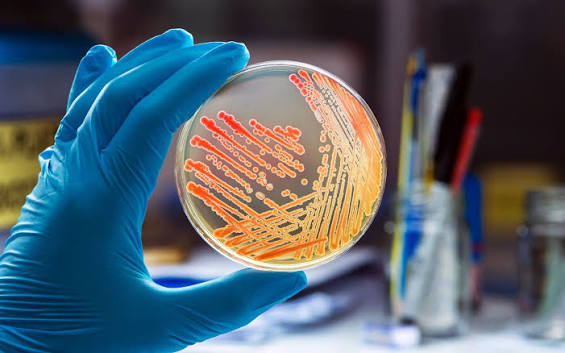
The objectives of Frontiers in Bacteriology are to advance scientific knowledge of bacterial biology and hostpathogen interactions, promote research into antimicrobial resistance and emerging bacterial threats, improv...
About the journal
Start your submission and get more impact for your research by publishing with us.

Ready to publish? Check our author guidelines for everything you need to know about submitting, from choosing a journal and section to preparing your manuscript.

Reviewing a manuscript? See our editor guidelines for everything you need to know about the Frontiers peer review process.

Our rigorous and transparent peer review combines expert assessment with constructive dialogue to strengthen your manuscript.

Article processing charges apply to articles accepted for publication by our external editors after rigorous peer review.
Houston Methodist Hospital
United States
Field Chief Editor
Frontiers in Bacteriology
University of Florida
United States
Specialty Chief Editor
Bacterial Genetics and AI-enhanced Microbial Engineering
Southwest University
China
Specialty Chief Editor
Antibiotic Resistance
University of Southampton
United Kingdom
Specialty Chief Editor
Pathogenesis, Vaccines, and Immunity of Bacterial Infections
Houston Methodist Research Institute
United States
Specialty Chief Editor
One Health in Bacteriology
School of Pharmacy, Faculty of Science, University of Nottingham
United Kingdom
Specialty Chief Editor
Emerging Bacterial Threats and their Treatment
UCONN Health
United States
Specialty Chief Editor
Molecular Bacteriology and Microbiome
Infectious and Tropical Diseases Unit, "Annunziata" HUB Hospital, Azienda Ospedaliera di Cosenza
Italy
Associate Editor
Antibiotic Resistance
87 editors · 0 reviewers
Bacteriology
Published
Victoria Cerecetto · Kornelia Smalla · Doreen Babin · Carolina Leoni
Frontiers in Bacteriology
doi 10.3389/fbrio.2025.1582787
Bacteriology
Published
Eisuke Kuroda · Yuriko Tanaka · Shigeto Hamaguchi
Frontiers in Bacteriology
doi 10.3389/fbrio.2025.1578341
Bacteriology
Published
Linda Rigerte · Anna Heintz-Buschart · Thomas Reitz · Mika T. Tarkka
Frontiers in Bacteriology
doi 10.3389/fbrio.2025.1572294
Bacteriology
Published
Christy N. Armstrong · Sudeshna Saha · Marnie A. Aagard · Mohamed Y. Mahmoud · Nissi M. Varki · Nicole M. Gilbert · Hermann B. Frieboes · Warren G. Lewis · Amanda L. Lewis
Frontiers in Bacteriology
doi 10.3389/fbrio.2025.1562077
Bacteriology
Published
Jemal Abdela · Mohammed Yusuf · Fuad Adem · Abdi Amin · Burka Mohammedsani · Mohammed Abdurke · Ame Mehadi · Ahmedmenewer Abdu · Hussein Mohammed
Frontiers in Bacteriology
doi 10.3389/fbrio.2025.1552671
Bacteriology
Published
Alo Edin · Dagnamyelew Tilahun · Berhanu Adula Jara · Angefa Ayele
Frontiers in Bacteriology
doi 10.3389/fbrio.2025.1439865
Bacteriology
Published
Ikram Khan · Imran Khan · Ali Sher Bacha · Yu Xiaohui · Ping Xie · Xiao-dong Xie · Zhiqiang Li
Frontiers in Bacteriology
doi 10.3389/fbrio.2025.1541085
Bacteriology
Published
Myron Christodoulides
Frontiers in Bacteriology
doi 10.3389/fbrio.2024.1530714
Open for submissions
Open for submissions
Open for submissions
Open for submissions
The journal covers the comprehensive study of bacteriology and host-pathogen interactions, including bacterial genetics, molecular mechanisms of infection, bacterial physiology, microbial communities, microbiome research, probiotics, cross-kingdom interactions, immune responses, antimicrobial resistance, phage therapies, bacterial vaccines, pathogenesis, diagnostics, treatment, and antimicrobial stewardship. Research may include molecular, cellular, experimental, computational, translational, clinical, and population-health approaches relevant to bacterial systems and their effects on human, animal, and environmental health.
The objectives of Frontiers in Bacteriology are to advance scientific knowledge of bacterial biology and host-pathogen interactions, promote research into antimicrobial resistance and emerging bacterial threats, improve understanding of bacterial genetics and pathogenesis, support the development of vaccines and innovative treatments, encourage microbiome and microbial engineering research, and translate scientific discoveries into effective clinical, public health, and One Health applications.
Official section page: https://www.frontiersin.org/journals/bacteriology/sections/antibiotic-resistance
Official section page: https://www.frontiersin.org/journals/bacteriology/sections/bacterial-genetics-and-ai-enhanced-microbial-engineering
Official section page: https://www.frontiersin.org/journals/bacteriology/sections/emerging-bacterial-threats-and-their-treatment
Official section page: https://www.frontiersin.org/journals/bacteriology/sections/molecular-bacteriology-and-microbiome
Official section page: https://www.frontiersin.org/journals/bacteriology/sections/one-health-in-bacteriology
Official section page: https://www.frontiersin.org/journals/bacteriology/sections/pathogenesis-vaccines-and-immunity-of-bacterial-infections
Fees are charged only after acceptance. Waivers and discounts are available for authors with limited funding.
Fees and waivers policyOpen Access Policy: The journal follows an open-access publishing model, providing readers with access to published research without subscription barriers.
Copyright and Licensing: Articles are published under the publisher's applicable open-access licensing terms, subject to the journal's copyright statement.
Peer Review Policy: Manuscripts undergo editorial assessment and peer review by editors and reviewers with relevant expertise. The process evaluates scientific rigor, methodological quality, originality, and relevance to the selected specialty section.
Publication Ethics: Authors must comply with applicable research ethics standards, accurately report findings, disclose funding and conflicts of interest, and provide correct authorship information.
Originality Policy: Submissions must comply with the publisher's requirements concerning plagiarism, duplicate publication, and research integrity.
Research Ethics and Biosafety: Research involving human participants, animals, clinical materials, infectious agents, or genetically modified microorganisms must follow applicable ethical approval, biosafety, and regulatory requirements.
Data Availability Policy: Authors should follow the journal's requirements for data availability, transparency, and reproducibility, including providing supporting datasets or repository links where applicable.
Corrections and Retractions: Published articles may be corrected or retracted when necessary to preserve the integrity of the scientific record.
Internal metrics, calculated on this platform and maintained by the editorial office.