
Paul Manger
University of the Witwatersrand
South Africa
Editor-in-Chief
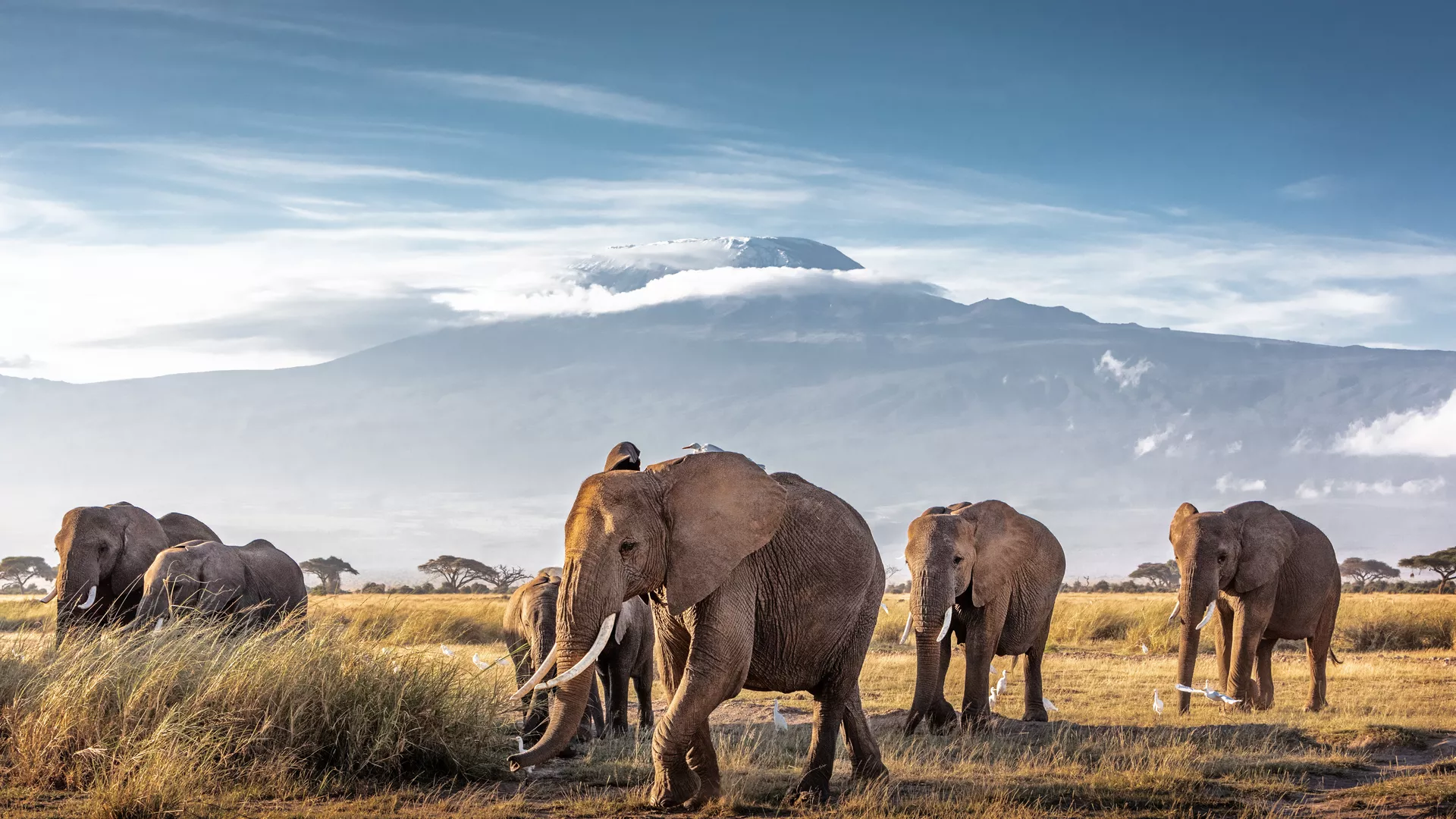
Frontiers in Mammal Science is a multidisciplinary journal that focuses on the study of mammalian biology, evolution, and conservation. Led by Field Chief Editor Paul Manger from the University of the Witwatersrand, F...
About the journal
Start your submission and get more impact for your research by publishing with us.

Ready to publish? Check our author guidelines for everything you need to know about submitting, from choosing a journal and section to preparing your manuscript.

Reviewing a manuscript? See our editor guidelines for everything you need to know about the Frontiers peer review process.

Our rigorous and transparent peer review combines expert assessment with constructive dialogue to strengthen your manuscript.
Article processing charges apply to articles accepted for publication by our external editors after rigorous peer review.
University of the Witwatersrand
South Africa
Editor-in-Chief
University of Pretoria
South Africa
Specialty Chief Editor
Life History and Conservation
State University of Rio Grande do Norte
Brazil
Specialty Chief Editor
Nervous System and Cognate Behaviors
School of Biological Sciences, Faculty of Medicine, Health and Life Sciences, Queen's University Belfast
United Kingdom
Specialty Chief Editor
Physiology and the Whole Organism Ethology
University of Pretoria
South Africa
Specialty Chief Editor
Life History and Conservation
University of Arkansas
United States
Specialty Chief Editor
Evolution, Anatomy and the Paleosciences
Cajal Institute, Spanish National Research Council (CSIC)
Spain
Specialty Chief Editor
Nervous System and Cognate Behaviors
University of Cape Town
South Africa
Associate Editor
Nervous System and Cognate Behaviors
68 editors · 0 reviewers
Mammal Science
Published
Adhil Bhagwandin · Chet C. Sherwood · Patrick R. Hof · Mads. F. Bertlesen · Abdulaziz N. Alagaili · Osama B. Mohammed · Nigel C. Bennett · Consolate Kaswera-Kyamakya · Emmanuel Gilissen · Paul R. Manger
Frontiers in Mammal Science
doi 10.3389/fmamm.2024.1355791
Mammal Science
Published
Melissa H. Y. Chong · Răzvan Gămănuţ
Frontiers in Mammal Science
doi 10.3389/fmamm.2024.1309665
Mammal Science
Published
Anna Lena Burger-Schulz · Eric Thiel · Julian Fennessy · Stephanie Fennessy · Paul Wilhelm Dierkes
Frontiers in Mammal Science
doi 10.3389/fmamm.2023.1243883
Mammal Science
Published
Sara Ruiz-Cabrera · Isabel Pérez-Santos · Josefa Zaldivar-Diez · Miguel Ángel García-Cabezas
Frontiers in Mammal Science
doi 10.3389/fmamm.2023.1241573
Mammal Science
Published
Shelly Masi
Frontiers in Mammal Science
doi 10.3389/fmamm.2023.1281030
Mammal Science
Published
Zdravko Petanjek · Ivan Banovac · Dora Sedmak · Matija Vid Prkačin · Ana Hladnik
Frontiers in Mammal Science
doi 10.3389/fmamm.2023.1242289
Mammal Science
Published
David M. Feliciano
Frontiers in Mammal Science
doi 10.3389/fmamm.2023.1231778
Mammal Science
Published
Cortney A. Watt · Cody G. Carlyle · Claire A. Hornby · Bryanna A. H. Sherbo
Frontiers in Mammal Science
doi 10.3389/fmamm.2023.1208276
Open for submissions
Open for submissions
Open for submissions
Open for submissions
Open for submissions
Open for submissions
Frontiers in Mammal Science is a multidisciplinary journal that focuses on the study of mammalian biology, evolution, and conservation. Led by Field Chief Editor Paul Manger from the University of the Witwatersrand, Frontiers in Mammal Science welcomes research contributions in various domains of mammal science, which bridge the gap between understanding mammalian biology and promoting conservation efforts. Topics include, but are not limited to: evolution, anatomy, and the palaeosciences, provides a platform for describing phylogenetic information and theoretical aspects of the evolutionary process, as well as anatomical and evolutionary descriptions of extant and extinct mammals, including the reptile-like mammals that gave rise to our class. life history and conservation, covers all the traditional fields of mammalian zoology, how mammals integrate with the environment or the ecosystem they inhabit, zoonotic diseases, and how this information, and that from the other sections, can be used to develop strategic conservation plans for both individual species and ecosystems. nervous system and cognate behaviours, incorporating studies of the structure and mechanisms of how animals perceive, respond to, think about, and act in response to relevant information both from within and without their bodies. physiology and whole organism ethology, encourages studies that encompass the biochemistry and physiology of single cells through to organs, whole organisms, and how organisms interact with environments at both individual and population levels. With over 6000 extant, and many more extinct, species, mammals have inhabited our planet for over 200 million years. Ranging in size from very small (less than a gram) to the largest animals that have ever lived, mammals occupy a wide variety of ecological niches and play a major role in the healthy functioning of ecosystems. Our knowledge of the complexity of mammalian biology and evolution, while extensive, is still sorely inadequate, especially for the lesser studied species in the more “remote” parts of the planet, with greater focus being placed on species that are either readily accessible or of financial/emotional value to humans. Frontiers in Mammal Science aims to provide a conduit for the dissemination of scientific studies describing all aspects of extant and extinct mammalian biology, including the common and the rare species from across the globe. We aim to encourage studies that range from structure to function, from the molecular level through to the whole organism level in a single species. The journal welcomes studies that elucidate the interactions between individual mammals within and between species, and how individuals, populations, and species interact with, and potentially affect or modify, their environment. Studies that augment our understanding of the evolution of mammals, their phylogenetic relationships, and how lineages, species, or specific parts of species, evolved are of crucial importance for our overall understanding of mammals. Frontiers in Mammal Science invites the submission of rigorous scientific manuscripts, particularly encouraging basic, or curiosity-driven, research, while maintaining a focus on the applicability of this research to address problems regarding the conservation of mammals across the globe and mitigating the deleterious effects of human activities on our nearest vertebrate relatives. The journal's emphasis on understanding mammalian biology, evolution, and conservation aligns with the objectives of the Sustainable Development Goal (SDG) 15: Life on Land. By promoting scientific studies on the interactions between mammals and their environments, as well as the development of strategic conservation plans, Frontiers in Mammal Science supports the global effort to preserve life on land and maintain healthy ecosystems for future generations. Manuscripts relating to topics that do not focus on mammalian biology, evolution, or conservation are not suitable for publication in this journal. Frontiers in Mammal Science is committed to advancing developments in the field of mammal science by allowing unrestricted access to articles and communicating scientific knowledge to researchers and the public alike, to enable the scientific breakthroughs of the future.
Frontiers in Mammal Science is a multidisciplinary journal that focuses on the study of mammalian biology, evolution, and conservation.
Led by Field Chief Editor Paul Manger from the University of the Witwatersrand, Frontiers in Mammal Science welcomes research contributions in various domains of mammal science, which bridge the gap between understanding mammalian biology and promoting conservation efforts. Topics include, but are not limited to:
evolution, anatomy, and the palaeosciences, provides a platform for describing phylogenetic information and theoretical aspects of the evolutionary process, as well as anatomical and evolutionary descriptions of extant and extinct mammals, including the reptile-like mammals that gave rise to our class.
life history and conservation, covers all the traditional fields of mammalian zoology, how mammals integrate with the environment or the ecosystem they inhabit, zoonotic diseases, and how this information, and that from the other sections, can be used to develop strategic conservation plans for both individual species and ecosystems.
nervous system and cognate behaviours, incorporating studies of the structure and mechanisms of how animals perceive, respond to, think about, and act in response to relevant information both from within and without their bodies.
physiology and whole organism ethology, encourages studies that encompass the biochemistry and physiology of single cells through to organs, whole organisms, and how organisms interact with environments at both individual and population levels.
With over 6000 extant, and many more extinct, species, mammals have inhabited our planet for over 200 million years. Ranging in size from very small (less than a gram) to the largest animals that have ever lived, mammals occupy a wide variety of ecological niches and play a major role in the healthy functioning of ecosystems. Our knowledge of the complexity of mammalian biology and evolution, while extensive, is still sorely inadequate, especially for the lesser studied species in the more “remote” parts of the planet, with greater focus being placed on species that are either readily accessible or of financial/emotional value to humans.
Frontiers in Mammal Science aims to provide a conduit for the dissemination of scientific studies describing all aspects of extant and extinct mammalian biology, including the common and the rare species from across the globe. We aim to encourage studies that range from structure to function, from the molecular level through to the whole organism level in a single species. The journal welcomes studies that elucidate the interactions between individual mammals within and between species, and how individuals, populations, and species interact with, and potentially affect or modify, their environment. Studies that augment our understanding of the evolution of mammals, their phylogenetic relationships, and how lineages, species, or specific parts of species, evolved are of crucial importance for our overall understanding of mammals.
Frontiers in Mammal Science invites the submission of rigorous scientific manuscripts, particularly encouraging basic, or curiosity-driven, research, while maintaining a focus on the applicability of this research to address problems regarding the conservation of mammals across the globe and mitigating the deleterious effects of human activities on our nearest vertebrate relatives.
The journal's emphasis on understanding mammalian biology, evolution, and conservation aligns with the objectives of the Sustainable Development Goal (SDG) 15: Life on Land. By promoting scientific studies on the interactions between mammals and their environments, as well as the development of strategic conservation plans, Frontiers in Mammal Science supports the global effort to preserve life on land and maintain healthy ecosystems for future generations.
Manuscripts relating to topics that do not focus on mammalian biology, evolution, or conservation are not suitable for publication in this journal.
Frontiers in Mammal Science is committed to advancing developments in the field of mammal science by allowing unrestricted access to articles and communicating scientific knowledge to researchers and the public alike, to enable the scientific breakthroughs of the future.
Source: https://www.frontiersin.org/journals/mammal-science/about
Official section page: https://www.frontiersin.org/journals/mammal-science/sections/evolution-anatomy-and-the-paleosciences
Official section page: https://www.frontiersin.org/journals/mammal-science/sections/life-history-and-conservation
Official section page: https://www.frontiersin.org/journals/mammal-science/sections/nervous-system-and-cognate-behaviors
Official section page: https://www.frontiersin.org/journals/mammal-science/sections/physiology-and-the-whole-organism-ethology
Fees are charged only after acceptance. Waivers and discounts are available for authors with limited funding.
Fees and waivers policySource: https://www.frontiersin.org/journals/mammal-science/about
Internal metrics, calculated on this platform and maintained by the editorial office.
Source: official publisher page · retrieved 2026-10-16
Some values were updated by the editorial office on 2026-10-23.