
Laura Ballerini
International School for Advanced Studies (SISSA)
Italy
Specialty Chief Editor
Frontiers in Neuroengineering
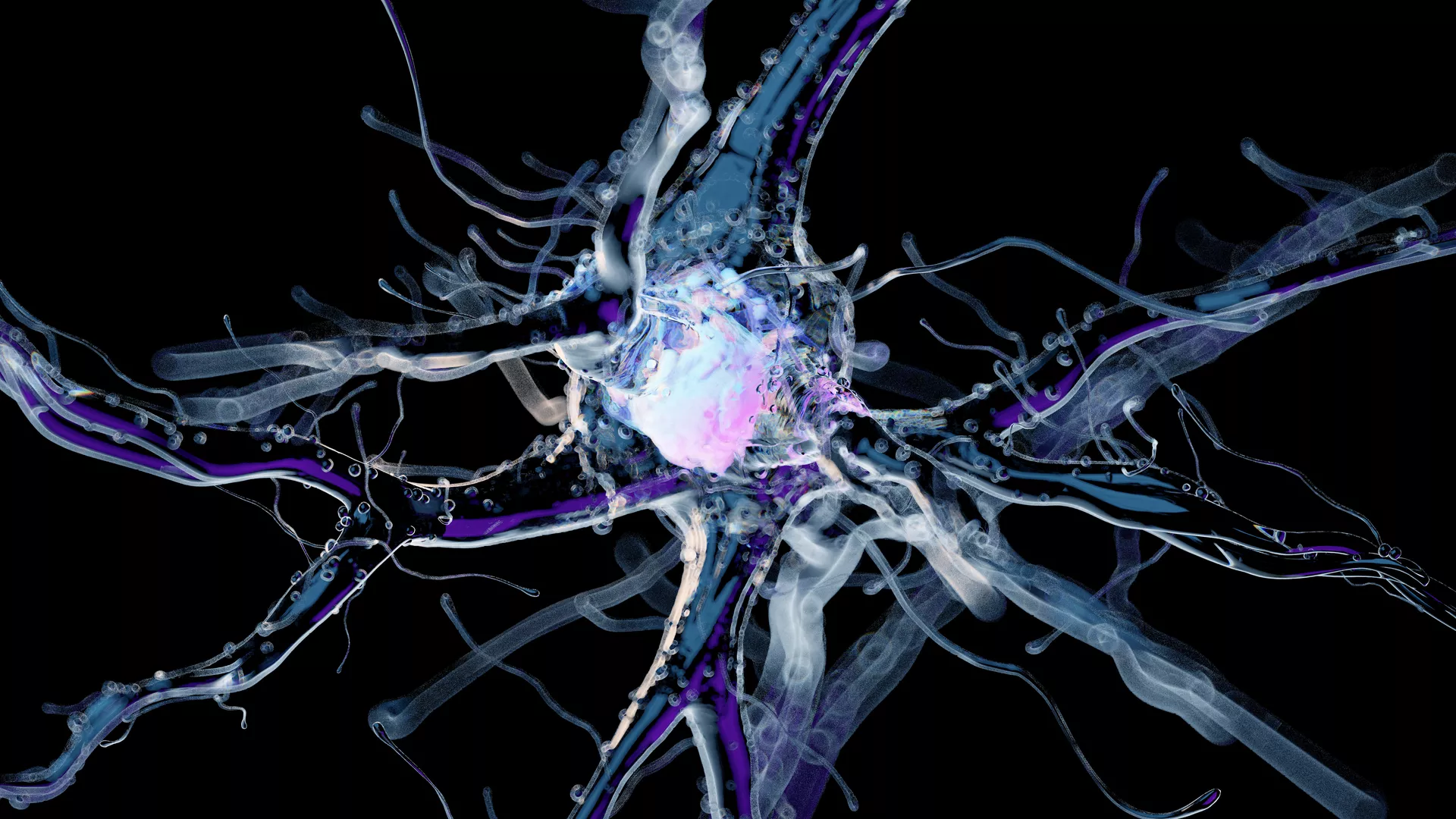
This journal is closed for submissions. Article submissions related to Neuroengineering are welcomed in Neural Technology, a specialty section of Frontiers in Neuroscience, which continues the mission of this closed s...
About the journal
Start your submission and get more impact for your research by publishing with us.
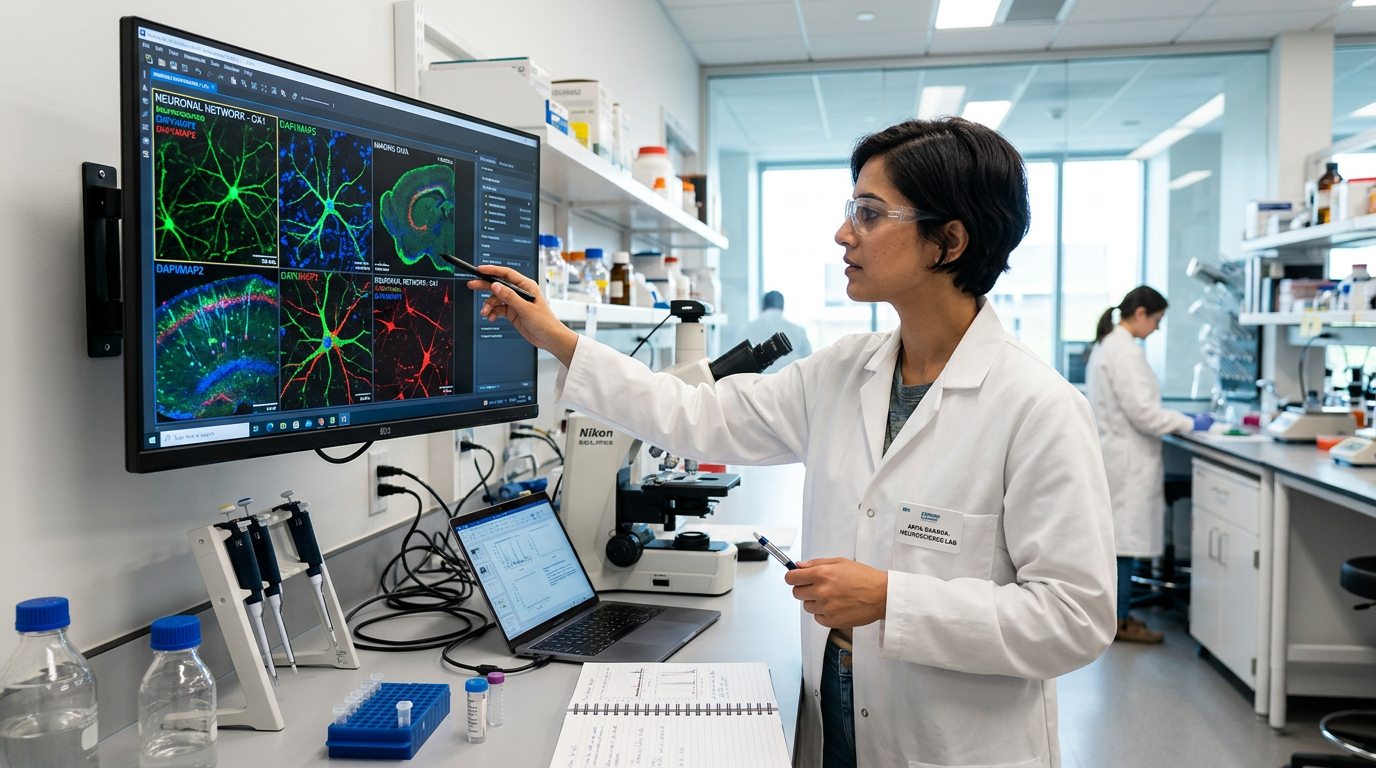
Ready to publish? Check our author guidelines for everything you need to know about submitting, from choosing a journal and section to preparing your manuscript.

Reviewing a manuscript? See our editor guidelines for everything you need to know about the Frontiers peer review process.

Our rigorous and transparent peer review combines expert assessment with constructive dialogue to strengthen your manuscript.

Article processing charges apply to articles accepted for publication by our external editors after rigorous peer review.
International School for Advanced Studies (SISSA)
Italy
Specialty Chief Editor
Frontiers in Neuroengineering
Italian Institute of Technology (IIT)
Italy
Associate Editor
Frontiers in Neuroengineering
École Normale Supérieure
France
Associate Editor
Frontiers in Neuroengineering
Italian Institute of Technology (IIT)
Italy
Associate Editor
Frontiers in Neuroengineering
Center for Nanomedicine and Tissue Engineering (nanomed3D)
Italy
Associate Editor
Frontiers in Neuroengineering
University of California, San Diego
United States
Associate Editor
Frontiers in Neuroengineering
University of Brescia
Italy
Associate Editor
Frontiers in Neuroengineering
University of Cambridge
United Kingdom
Associate Editor
Frontiers in Neuroengineering
23 editors · 0 reviewers
Neuroscience
Published
Brittany Mei Young · Zack Nigogosyan · Alexander Remsik · Léo M. Walton · Jie Song · Veena A. Nair · Scott W. Grogan · Mitchell E. Tyler · Dorothy Farrar Edwards · Kristin Caldera · Justin A. Sattin · Justin C. Williams · Vivek Prabhakaran
Frontiers in Neuroengineering
doi 10.3389/fneng.2014.00025
Neuroscience
Published
Ahmed Eleryan · Mukta Vaidya · Joshua Southerland · Islam S. Badreldin · Karthikeyan Balasubramanian · Andrew H. Fagg · Nicholas Hatsopoulos · Karim Oweiss
Frontiers in Neuroengineering
doi 10.3389/fneng.2014.00023
Neuroscience
Published
Takashi Ono · Keiichiro Shindo · Kimiko Kawashima · Naoki Ota · Mari Ito · Tetsuo Ota · Masahiko Mukaino · Toshiyuki Fujiwara · Akio Kimura · Meigen Liu · Junichi Ushiba
Frontiers in Neuroengineering
doi 10.3389/fneng.2014.00019
Neuroscience
Published
Elisabeth V. C. Friedrich · Neil Suttie · Aparajithan Sivanathan · Theodore Lim · Sandy Louchart · Jaime A. Pineda
Frontiers in Neuroengineering
doi 10.3389/fneng.2014.00021
Neuroscience
Published
Brittany M. Young · Zack Nigogosyan · Veena A. Nair · Léo M. Walton · Jie Song · Mitchell E. Tyler · Dorothy F. Edwards · Kristin Caldera · Justin A. Sattin · Justin C. Williams · Vivek Prabhakaran
Frontiers in Neuroengineering
doi 10.3389/fneng.2014.00018
Neuroscience
Published
Sharanya Arcot Desai · Claire-Anne Gutekunst · Steve M. Potter · Robert E. Gross
Frontiers in Neuroengineering
doi 10.3389/fneng.2014.00016
Neuroscience
Published
Silviya M. Ojovan · Mathew McDonald · Noha Rabieh · Nava Shmuel · Hadas Erez · Milos Nesladek · Micha E. Spira
Frontiers in Neuroengineering
doi 10.3389/fneng.2014.00017
Neuroscience
Published
Stéphanie Martin · Peter Brunner · Chris Holdgraf · Hans-Jochen Heinze · Nathan E. Crone · Jochem Rieger · Gerwin Schalk · Robert T. Knight · Brian N. Pasley
Frontiers in Neuroengineering
doi 10.3389/fneng.2014.00014
No research topics yet
Calls for papers will appear here.
This journal is closed for submissions. Article submissions related to Neuroengineering are welcomed in Neural Technology, a specialty section of Frontiers in Neuroscience, which continues the mission of this closed specialty journal. Frontiers in Neuroengineering is devoted to promoting research integrating neuroengineering, nanotechnologies and neurosciences. Convergence between neurobiology and quantum-, nano- and micro-sciences is particularly emphasized as an extremely promising way toward substantial discoveries in brain research and as a technological foundation for future neuroprosthetics and brain-machine interfacing. This interdisciplinary approach that involves neuroengineering, modeling, nanotechnology, imaging, and the development of micromachining and other devices to solve important emerging problems in clinical neurosciences, opens great new challenges. We therefore invite original contributions on a wide range of topics that present the fruit of such interdisciplinary convergence or that provide stimuli for future alliances. We aim to provide an interactive forum for cutting-edge studies on the nervous system, on new materials and techniques for interfacing neurons with artificial devices, on novel molecular tools to probe the complexity of the brain at the system-, network-, cellular-, subcellular- and molecular level. We also aim to promulgate the best interdisciplinary research to the broader neuroscience community. Our goals include advancing the core technologies and materials as a foundation for future neuroprosthetics and artificial interfaces, while enhancing our understanding of the brain. Proposals dealing with reverse engineering network-level functions aimed at advancing our basic knowledge relevant for future neuroengineering strategies are welcome. Although experimental research is the primary focus of the journal, projects integrating theoretical and quantitative modeling approaches at all levels of complexity are also welcome.
This journal is closed for submissions. Article submissions related to Neuroengineering are welcomed in Neural Technology, a specialty section of Frontiers in Neuroscience, which continues the mission of this closed specialty journal.
Frontiers in Neuroengineering is devoted to promoting research integrating neuroengineering, nanotechnologies and neurosciences. Convergence between neurobiology and quantum-, nano- and micro-sciences is particularly emphasized as an extremely promising way toward substantial discoveries in brain research and as a technological foundation for future neuroprosthetics and brain-machine interfacing. This interdisciplinary approach that involves neuroengineering, modeling, nanotechnology, imaging, and the development of micromachining and other devices to solve important emerging problems in clinical neurosciences, opens great new challenges. We therefore invite original contributions on a wide range of topics that present the fruit of such interdisciplinary convergence or that provide stimuli for future alliances. We aim to provide an interactive forum for cutting-edge studies on the nervous system, on new materials and techniques for interfacing neurons with artificial devices, on novel molecular tools to probe the complexity of the brain at the system-, network-, cellular-, subcellular- and molecular level. We also aim to promulgate the best interdisciplinary research to the broader neuroscience community. Our goals include advancing the core technologies and materials as a foundation for future neuroprosthetics and artificial interfaces, while enhancing our understanding of the brain. Proposals dealing with reverse engineering network-level functions aimed at advancing our basic knowledge relevant for future neuroengineering strategies are welcome. Although experimental research is the primary focus of the journal, projects integrating theoretical and quantitative modeling approaches at all levels of complexity are also welcome.
Source: https://www.frontiersin.org/journals/neuroengineering/about
No sections yet
Specialty sections will be listed here.
Not listed yet
Accepted article types will be listed here.
The article processing charge for this journal has not been published yet.
Fees are charged only after acceptance. Waivers and discounts are available for authors with limited funding.
Fees and waivers policySource: https://www.frontiersin.org/journals/neuroengineering/about
Internal metrics, calculated on this platform and maintained by the editorial office.