
Alois C Knoll
Technical University of Munich
Germany
Specialty Chief Editor
Frontiers in Neurorobotics
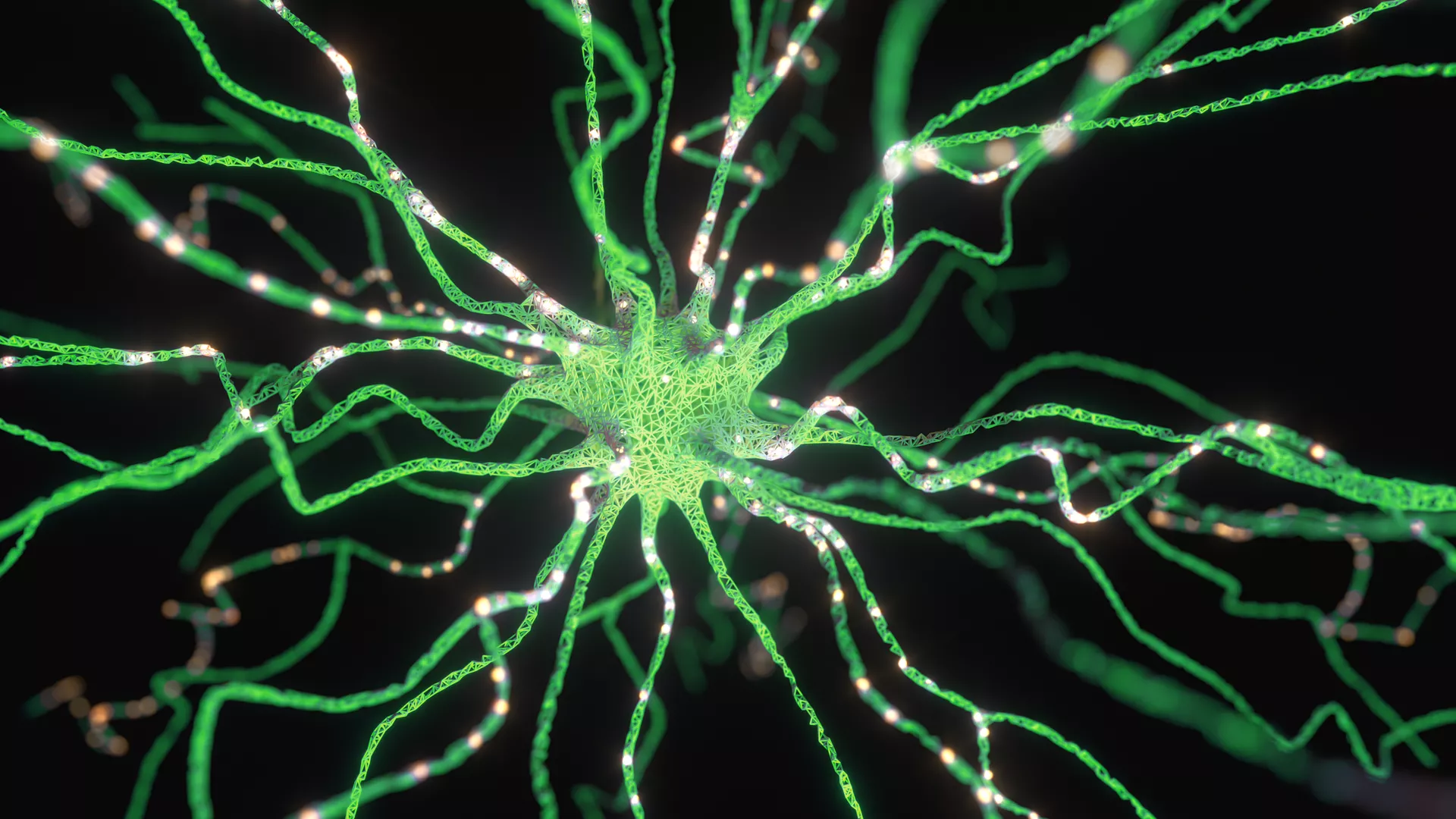
Frontiers in Neurorobotics is a leading multidisciplinary journal that focuses on the science and technology of embodied autonomous systems and their applications. Led by Specialty Chief Editors Prof Alois C. Knoll (T...
About the journal
Start your submission and get more impact for your research by publishing with us.

Ready to publish? Check our author guidelines for everything you need to know about submitting, from choosing a journal and section to preparing your manuscript.

Reviewing a manuscript? See our editor guidelines for everything you need to know about the Frontiers peer review process.

Our rigorous and transparent peer review combines expert assessment with constructive dialogue to strengthen your manuscript.

Article processing charges apply to articles accepted for publication by our external editors after rigorous peer review.
Technical University of Munich
Germany
Specialty Chief Editor
Frontiers in Neurorobotics
Chemnitz University of Technology
Germany
Specialty Chief Editor
Frontiers in Neurorobotics
Universidad Carlos III de Madrid de Madrid
Spain
Associate Editor
Frontiers in Neurorobotics
Sevilla University
Spain
Associate Editor
Frontiers in Neurorobotics
École nationale supérieure de l'électronique et de ses applications
France
Associate Editor
Frontiers in Neurorobotics
Dept. of Neurophysiology and Pathophysiology, University Medical Center Hamburg-Eppendorf
Germany
Associate Editor
Frontiers in Neurorobotics
University of Naples Federico II
Italy
Associate Editor
Frontiers in Neurorobotics
Multimodal Neurotechnology Group Institute of Cognitive Neuroscience and Psychology HUN-REN Research Centre for Natural Sciences Hungarian Research Network
Hungary
Associate Editor
Frontiers in Neurorobotics
112 editors · 0 reviewers
Original Research
Published
Rocco Salvatore Calabrò · Andrea Calderone · Alessio Baricich · Andrea Santamato · Francesca Antonia Arcadi · Alessandro Marco De Nunzio · Angelo Quartarone
Frontiers in Neurorobotics
doi 10.3389/fnbot.2026.1863916
Original Research
Published
Maxime Marchal · Raphaël Furnémont · Tom Verstraten · Ghilés Mostafaoui
Frontiers in Neurorobotics
doi 10.3389/fnbot.2026.1821320
Original Research
Published
Weiguo Shi · Weiqun Wang · Jiaxing Wang · Shengda Liu · Xu Liang · Tianyu Lin · Kexin Xiang · Zeng-Guang Hou
Frontiers in Neurorobotics
doi 10.3389/fnbot.2026.1779125
Original Research
Published
Lixa Wang · Yunqing Liu · Linyang Guo · Ran Zhang · Yu Cui · Yihan Cui · Chunlin Xu
Frontiers in Neurorobotics
doi 10.3389/fnbot.2026.1799054
Original Research
Published
Zhongyu Li · Yimin Shen · Xiaoping Jing · Rong Wang · Di Zhou · Yangyong Guo · Wei Yu · Fei Du
Frontiers in Neurorobotics
doi 10.3389/fnbot.2026.1774633
Editorial
Published
Alessandro Mengarelli · Andrea Tigrini · Ali H. Al-Timemy · Silvia Muceli · Federica Verdini
Frontiers in Neurorobotics
doi 10.3389/fnbot.2026.1858458
Original Research
Published
Xin Qi · Hang Bao
Frontiers in Neurorobotics
doi 10.3389/fnbot.2026.1795490
Original Research
Published
Xukun Liu · Fengjuan Xie · Yu Liu · Jiaqiu Song
Frontiers in Neurorobotics
doi 10.3389/fnbot.2026.1769924
Open for submissions
Open for submissions
Open for submissions
Frontiers in Neurorobotics is a leading multidisciplinary journal that focuses on the science and technology of embodied autonomous systems and their applications. Led by Specialty Chief Editors Prof Alois C. Knoll (Technical University of Munich, Germany) and Prof Florian Röhrbein (Chemnitz University of Technology, Germany), Frontiers in Neurorobotics advances understanding of neurorobotics, and publishes radically new principles, methods, tools and methods to study the design and evolution of autonomous self-learning systems capable of open-ended knowledge acquisition, potentially leading to Artificial General Intelligence. Topics include but are not limited to: actual biological systems (e.g., in vivo and in vitro neural systems) artificial spiking or non-spiking neural networks brain-inspired algorithms (e.g., connectionist networks) computational models of biological neural networks embodied autonomous systems controlled by brain-inspired algorithms large-scale simulations of neural microcircuits micro- and macro-engineering and mechatronics of robotic devices driven by AI controllers models complemented by experimental studies that reveal self-organising principles of embodied systems studies on the impact of such systems on our daily lives. The journal welcomes original research papers and reviews on the state of the art in the theory and practice of embodied autonomous systems controlled by brain-inspired algorithms (e.g., connectionist networks), computational models of biological neural networks (e.g., artificial spiking or non-spiking neural networks, large-scale simulations of neural microcircuits), and actual biological systems (e.g., in vivo and in vitro neural systems). The embodiments of these autonomous systems may be robots of various types or any other form of physical actuation that can benefit from biologically inspired control and represent an embodiment of real-time AI, such as prosthetic devices, wearable systems, micro-machines, intelligent furniture, general household appliances, micro- and macro-infrastructure management systems, dedicated cognitive hardware devices or software functions implemented on general purpose hardware. Models complemented by experimental studies that reveal self-organising principles of embodied systems are also welcome. Moreover, the journal publishes micro- and macro-engineering and mechatronics of robotic devices driven by AI controllers, as well as studies on the impact of such systems on our daily lives. Manuscripts relating to classical control of robots and/or focusing on the components on which such robots and their controllers rely, e.g. computer vision modules, sensors, hardware designs, etc., are out of scope and not suitable for publication in this journal. Through unrestricted access to articles, Frontiers in Neurorobotics is committed to advancing developments in the field of embodied autonomous systems and facilitating the communication of scientific knowledge to researchers and the public. Join us in shaping the future of neurorobotics and its applications.
Frontiers in Neurorobotics is a leading multidisciplinary journal that focuses on the science and technology of embodied autonomous systems and their applications.
Led by Specialty Chief Editors Prof Alois C. Knoll (Technical University of Munich, Germany) and Prof Florian Röhrbein (Chemnitz University of Technology, Germany), Frontiers in Neurorobotics advances understanding of neurorobotics, and publishes radically new principles, methods, tools and methods to study the design and evolution of autonomous self-learning systems capable of open-ended knowledge acquisition, potentially leading to Artificial General Intelligence. Topics include but are not limited to:
actual biological systems (e.g., in vivo and in vitro neural systems)
artificial spiking or non-spiking neural networks
brain-inspired algorithms (e.g., connectionist networks)
computational models of biological neural networks
embodied autonomous systems controlled by brain-inspired algorithms
large-scale simulations of neural microcircuits
micro- and macro-engineering and mechatronics of robotic devices driven by AI controllers
models complemented by experimental studies that reveal self-organising principles of embodied systems
studies on the impact of such systems on our daily lives.
The journal welcomes original research papers and reviews on the state of the art in the theory and practice of embodied autonomous systems controlled by brain-inspired algorithms (e.g., connectionist networks), computational models of biological neural networks (e.g., artificial spiking or non-spiking neural networks, large-scale simulations of neural microcircuits), and actual biological systems (e.g., in vivo and in vitro neural systems).
The embodiments of these autonomous systems may be robots of various types or any other form of physical actuation that can benefit from biologically inspired control and represent an embodiment of real-time AI, such as prosthetic devices, wearable systems, micro-machines, intelligent furniture, general household appliances, micro- and macro-infrastructure management systems, dedicated cognitive hardware devices or software functions implemented on general purpose hardware.
Models complemented by experimental studies that reveal self-organising principles of embodied systems are also welcome. Moreover, the journal publishes micro- and macro-engineering and mechatronics of robotic devices driven by AI controllers, as well as studies on the impact of such systems on our daily lives.
Manuscripts relating to classical control of robots and/or focusing on the components on which such robots and their controllers rely, e.g. computer vision modules, sensors, hardware designs, etc., are out of scope and not suitable for publication in this journal.
Through unrestricted access to articles, Frontiers in Neurorobotics is committed to advancing developments in the field of embodied autonomous systems and facilitating the communication of scientific knowledge to researchers and the public. Join us in shaping the future of neurorobotics and its applications.
Source: https://www.frontiersin.org/journals/neurorobotics/about
No sections yet
Specialty sections will be listed here.
Fees are charged only after acceptance. Waivers and discounts are available for authors with limited funding.
Fees and waivers policySource: https://www.frontiersin.org/journals/neurorobotics/about
Internal metrics, calculated on this platform and maintained by the editorial office.
Source: official publisher page · retrieved 2026-10-16
Some values were updated by the editorial office on 2026-10-21.