
John D Imig
University of Arkansas for Medical Sciences
United States
Editor-in-Chief
Vascular Physiology

Frontiers in Physiology explores the physiology of living systems across all levels, from the molecular and subcellular to the intact organism and its interaction with the environment. Led by Field Chief Editor Prof J...
About the journal
Start your submission and get more impact for your research by publishing with us.
Ready to publish? Check our author guidelines for everything you need to know about submitting, from choosing a journal and section to preparing your manuscript.

Reviewing a manuscript? See our editor guidelines for everything you need to know about the Frontiers peer review process.

Our rigorous and transparent peer review combines expert assessment with constructive dialogue to strengthen your manuscript.
Article processing charges apply to articles accepted for publication by our external editors after rigorous peer review.
University of Arkansas for Medical Sciences
United States
Editor-in-Chief
Vascular Physiology
Medical College of Wisconsin
United States
Specialty Chief Editor
Mitochondrial Research
University of Göttingen
Germany
Specialty Chief Editor
Invertebrate Physiology
The Herbert Wertheim UF Scripps Institute for Biomedical Innovation & Technology
United States
Specialty Chief Editor
Cell Physiology
Dalian Institute of Chemical Physics, Chinese Academy of Sciences (CAS)
China
Specialty Chief Editor
Biophysics
Julich Research Center, Helmholtz Association of German Research Centres (HZ)
Germany
Specialty Chief Editor
Membrane Physiology and Membrane Biophysics
University of Wisconsin–Milwaukee
United States
Specialty Chief Editor
Avian Physiology
University of Missouri
United States
Specialty Chief Editor
Autonomic Neuroscience
2,044 editors · 0 reviewers
Original Research
Published
Tiemin Teng · Lei Zhang
Frontiers in Physiology
doi 10.3389/fphys.2026.1923556
Systematic Review
Published
Jie Mou · Jingxian Yin · Lingting Fan · Wen Zhang · Junxian He · Hongyu Sun
Frontiers in Physiology
doi 10.3389/fphys.2026.1908897
Original Research
Published
Chaofeng Xing · Fanghong Li · Yan Zou · Cheng Song · Dan Luo · Jian Ruan · Minyi Tang · Qihua Xu · Yunping Mu · Jie Shen · Allan Zijian Zhao
Frontiers in Physiology
doi 10.3389/fphys.2026.1948763
Original Research
Published
Bo Xie · Yaqin Yun · Zhouhua Xu · Yue Meng · Mingxuan Peng · Yuqiao Xie · Huiyun Zhou · Hong Xu · Lingjie Xu
Frontiers in Physiology
doi 10.3389/fphys.2026.1923785
Original Research
Published
Rani Wainer-Shlomo · Michal Barsheshet Peer · Mona Shehadeh · Shaul Atar · Nir Qvit · Offir Ertracht
Frontiers in Physiology
doi 10.3389/fphys.2026.1923294
Review
Published
Xinyu Wang · Jun Han · Su Yang · Minghui Xiu · Zekun Yu
Frontiers in Physiology
doi 10.3389/fphys.2026.1910923
Review
Published
Ethan A. Simpson · Celina Phan · Jason P. Acker
Frontiers in Physiology
doi 10.3389/fphys.2026.1975105
Review
Published
Kun Wang · Xiangkun Mei · Hongqiang Gao
Frontiers in Physiology
doi 10.3389/fphys.2026.1955737
Open for submissions
Open for submissions
Open for submissions
Open for submissions
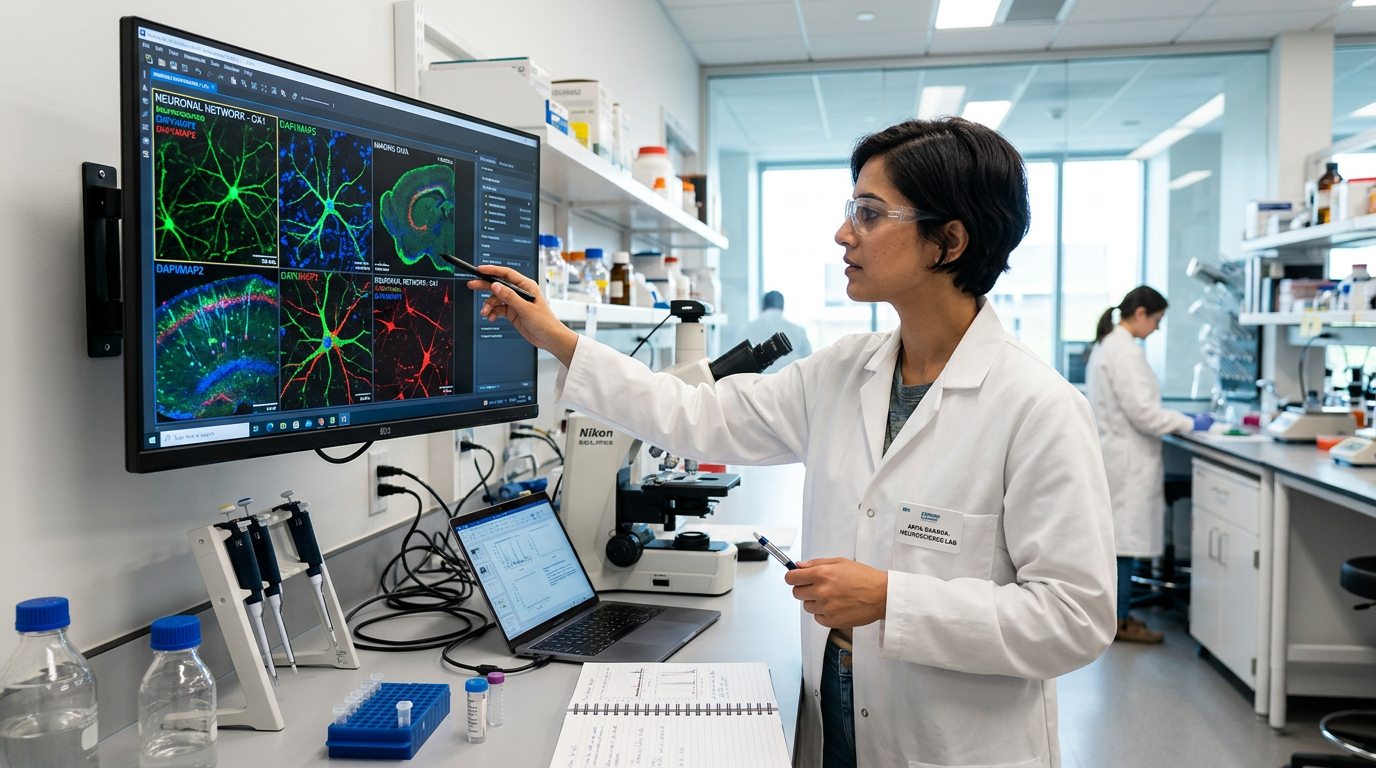
Frontiers in Physiology explores the physiology of living systems across all levels, from the molecular and subcellular to the intact organism and its interaction with the environment. Led by Field Chief Editor Prof John D Imig (University of Arkansas for Medical Sciences, USA) and indexed in Scopus, Web of Science (SCIE), PubMed Central (PMC), and DOAJ, the journal welcomes human and animal studies across all areas of physiology, including technologies for investigating physiological function. Topics of interest include, but are not limited to: avian, aquatic, and invertebrate physiology biophysics, medical physics and imaging cancer-related physiology and pathophysiology cardiac electrophysiology cell, membrane, metabolic, mitochondrial and redox physiology chronobiology computational physiology and medicine craniofacial, tooth, skin, skeletal, and striated muscle physiology developmental physiology environmental, aviation, and space physiology exercise physiology gastrointestinal and physiology integrative, clinical, and translational physiology neurophysiology and autonomic neuroscience physio-logging reproductive and mating physiology respiratory, vascular, renal and red blood cell physiology. Frontiers in Physiology particularly welcomes studies that support and advance the UN’s Sustainable Development Goals (SDGs), notably SDG 3: good health and well-being. Manuscripts that focus solely on clinical or medical research, including cancer studies, traditional medicine, and patient prognosis, are not suitable for publication in this journal. Additionally, research that is purely statistical or computational, such as regression analysis or network analysis, without a clear physiological context or application, is not within the scope of this journal. Frontiers in Physiology welcomes cancer-related research which focuses on the physiology and pathophysiology of the disease from cellular mechanisms to altered organ physiology. Should a manuscript purely focus on cancer etiology, cancer bioinformatics identifying novel biomarkers, cancer treatments, and cancer disease progression, it will not be considered in scope for the journal. Similarly, manuscripts on disease etiology, purely pathological processes, identification of novel biomarkers, and the progression, treatment, or management of disease – including clinical trials, and pilot studies – or purely bibliometric studies are not suitable for publication in this journal, and will be redirected to Frontiers in Medicine or Frontiers in Oncology as appropriate. Case reports will be considered in specified sections for publication in this journal. Please check section scope descriptions. Frontiers’ journals require that manuscripts primarily comprising computational studies of public data, must include appropriate validation. Please refer to the Frontiers Standards for research methodology policy, for more information. Manuscripts not adhering to these standards will not be considered. Frontiers in Physiology is committed to understanding how body components work together to maintain a healthy state by communicating scientific knowledge to researchers and the public alike, to enable the scientific breakthroughs of the future.
Frontiers in Physiology explores the physiology of living systems across all levels, from the molecular and subcellular to the intact organism and its interaction with the environment.
Led by Field Chief Editor Prof John D Imig (University of Arkansas for Medical Sciences, USA) and indexed in Scopus, Web of Science (SCIE), PubMed Central (PMC), and DOAJ, the journal welcomes human and animal studies across all areas of physiology, including technologies for investigating physiological function. Topics of interest include, but are not limited to:
avian, aquatic, and invertebrate physiology
biophysics, medical physics and imaging
cancer-related physiology and pathophysiology
cardiac electrophysiology
cell, membrane, metabolic, mitochondrial and redox physiology
chronobiology
computational physiology and medicine
craniofacial, tooth, skin, skeletal, and striated muscle physiology
developmental physiology
environmental, aviation, and space physiology
exercise physiology
gastrointestinal and physiology
integrative, clinical, and translational physiology
neurophysiology and autonomic neuroscience
physio-logging
reproductive and mating physiology
respiratory, vascular, renal and red blood cell physiology.
Frontiers in Physiology particularly welcomes studies that support and advance the UN’s Sustainable Development Goals (SDGs), notably SDG 3: good health and well-being.
Manuscripts that focus solely on clinical or medical research, including cancer studies, traditional medicine, and patient prognosis, are not suitable for publication in this journal. Additionally, research that is purely statistical or computational, such as regression analysis or network analysis, without a clear physiological context or application, is not within the scope of this journal.
Frontiers in Physiology welcomes cancer-related research which focuses on the physiology and pathophysiology of the disease from cellular mechanisms to altered organ physiology. Should a manuscript purely focus on cancer etiology, cancer bioinformatics identifying novel biomarkers, cancer treatments, and cancer disease progression, it will not be considered in scope for the journal. Similarly, manuscripts on disease etiology, purely pathological processes, identification of novel biomarkers, and the progression, treatment, or management of disease – including clinical trials, and pilot studies – or purely bibliometric studies are not suitable for publication in this journal, and will be redirected to Frontiers in Medicine or Frontiers in Oncology as appropriate. Case reports will be considered in specified sections for publication in this journal. Please check section scope descriptions.
Frontiers’ journals require that manuscripts primarily comprising computational studies of public data, must include appropriate validation. Please refer to the Frontiers Standards for research methodology policy, for more information. Manuscripts not adhering to these standards will not be considered.
Frontiers in Physiology is committed to understanding how body components work together to maintain a healthy state by communicating scientific knowledge to researchers and the public alike, to enable the scientific breakthroughs of the future.
Source: https://www.frontiersin.org/journals/physiology/about
Official section page: https://www.frontiersin.org/journals/physiology/sections/aquatic-physiology
Official section page: https://www.frontiersin.org/journals/physiology/sections/autonomic-neuroscience
Official section page: https://www.frontiersin.org/journals/physiology/sections/avian-physiology
Official section page: https://www.frontiersin.org/journals/physiology/sections/biophysics
Official section page: https://www.frontiersin.org/journals/physiology/sections/cardiac-electrophysiology
Official section page: https://www.frontiersin.org/journals/physiology/sections/cell-physiology
Official section page: https://www.frontiersin.org/journals/physiology/sections/chronobiology
Official section page: https://www.frontiersin.org/journals/physiology/sections/clinical-and-translational-physiology
Official section page: https://www.frontiersin.org/journals/physiology/sections/computational-physiology-and-medicine
Official section page: https://www.frontiersin.org/journals/physiology/sections/craniofacial-biology-and-dental-research
Official section page: https://www.frontiersin.org/journals/physiology/sections/developmental-physiology
Official section page: https://www.frontiersin.org/journals/physiology/sections/environmental-aviation-and-space-physiology
Official section page: https://www.frontiersin.org/journals/physiology/sections/exercise-physiology
Official section page: https://www.frontiersin.org/journals/physiology/sections/gastrointestinal-sciences
Official section page: https://www.frontiersin.org/journals/physiology/sections/integrative-physiology
Official section page: https://www.frontiersin.org/journals/physiology/sections/invertebrate-physiology
Official section page: https://www.frontiersin.org/journals/physiology/sections/lipid-and-fatty-acid-research
Official section page: https://www.frontiersin.org/journals/physiology/sections/medical-physics-and-imaging
Official section page: https://www.frontiersin.org/journals/physiology/sections/membrane-physiology-and-membrane-biophysics
Official section page: https://www.frontiersin.org/journals/physiology/sections/metabolic-physiology
Official section page: https://www.frontiersin.org/journals/physiology/sections/mitochondrial-research
Official section page: https://www.frontiersin.org/journals/physiology/sections/physio-logging
Official section page: https://www.frontiersin.org/journals/physiology/sections/red-blood-cell-physiology
Official section page: https://www.frontiersin.org/journals/physiology/sections/redox-physiology
Official section page: https://www.frontiersin.org/journals/physiology/sections/renal-physiology-and-pathophysiology
Official section page: https://www.frontiersin.org/journals/physiology/sections/reproductive-and-mating-physiology
Official section page: https://www.frontiersin.org/journals/physiology/sections/respiratory-physiology-and-pathophysiology
Official section page: https://www.frontiersin.org/journals/physiology/sections/skeletal-physiology
Official section page: https://www.frontiersin.org/journals/physiology/sections/skin-physiology
Official section page: https://www.frontiersin.org/journals/physiology/sections/striated-muscle-physiology
Official section page: https://www.frontiersin.org/journals/physiology/sections/vascular-physiology
Fees are charged only after acceptance. Waivers and discounts are available for authors with limited funding.
Fees and waivers policySource: https://www.frontiersin.org/journals/physiology/about
Internal metrics, calculated on this platform and maintained by the editorial office.
Source: official publisher page · retrieved 2026-10-16
Some values were updated by the editorial office on 2026-10-21.