
John R Porter
University of Copenhagen
Denmark
Editor-in-Chief
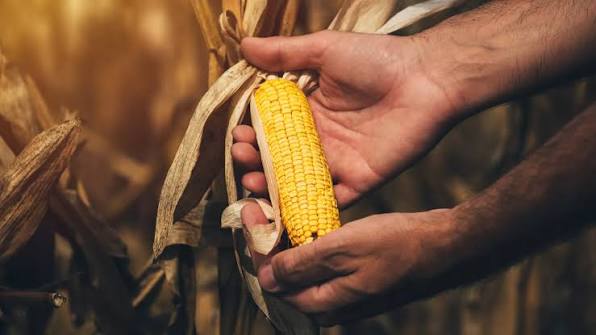
To advance scientific knowledge in agronomy, promote sustainable and climateresilient crop production, improve the efficient use of water and nutrients, encourage interdisciplinary collaboration, and support innovativ...
About the journal
Start your submission and get more impact for your research by publishing with us.
Ready to publish? Check our author guidelines for everything you need to know about submitting, from choosing a journal and section to preparing your manuscript.

Reviewing a manuscript? See our editor guidelines for everything you need to know about the Frontiers peer review process.
Our rigorous and transparent peer review combines expert assessment with constructive dialogue to strengthen your manuscript.
Article processing charges apply to articles accepted for publication by our external editors after rigorous peer review.
University of Copenhagen
Denmark
Editor-in-Chief
Bangor University
United Kingdom
Specialty Chief Editor
Plant-Soil Interactions
Gansu Agricultural University
China
Specialty Chief Editor
Field Water Management
University of Florence
Italy
Specialty Chief Editor
Climate-Smart Agronomy
Ghent University
Belgium
Specialty Chief Editor
Disease Management
University of British Columbia
Canada
Specialty Chief Editor
Pest Management
University of Missouri
United States
Specialty Chief Editor
Weed Management
INRAE, UMR Agroécologie
France
Specialty Chief Editor
Agroecological Cropping Systems
176 editors · 0 reviewers
Original Research
Published
Siyuan Yan · Shihao Zhang · Jiping Liu · Kangdong Huang · Liuying Wen · Lingling Pan · Xiumei Huang · Weiwei Wu · Yue Qin · Xiaodong Li
Frontiers in Agronomy
doi 10.3389/fagro.2026.1930317
Review
Published
Sourav Paramanik · Poonguzhali Subramanian · Mahalakshmi Mani · Jothika Manokaran · Divya Nagarajan · Karthika Rajendran
Frontiers in Agronomy
doi 10.3389/fagro.2026.1952898
Review
Published
Arushi Padiyal · Prashant Chauhan · Vikash Kumar · Sunny Dhir · Yashika Walia · Rahul · Faizan Ahmad · Nikita Tushir · Abhay Kumar Pandey · Abhishek Kumar
Frontiers in Agronomy
doi 10.3389/fagro.2026.1878945
Original Research
Published
María Rosa Mosquera-Losada · Parisa Azizi · Francisco Javier Rodríguez-Rigueiro · Ana Couso-Viana · José Javier Santiago-Freijanes · Nuria Ferreiro-Domínguez
Frontiers in Agronomy
doi 10.3389/fagro.2026.1823692
Original Research
Published
Qi Feng · Zefan Huo · Xingjiang Chen · Xuebai Qiu · Jingrong Hu · Liuti Cai · Ning Lu · Caihua Shi · Mengxue Xu · Hancheng Wang
Frontiers in Agronomy
doi 10.3389/fagro.2026.1926126
Original Research
Published
Lucia Crosetto · Barbara Moretti · Riccardo Cecire · Eleonora Miniotti · Marco Romani · Silvia Fogliatto · Francesco Vidotto · Luisella Celi · Daniel Said-Pullicino
Frontiers in Agronomy
doi 10.3389/fagro.2026.1892935
Original Research
Published
Tsewang Dolma · L.K. Sharma · Rakesh Sharma · Gulzar Ahmad Khan · Mohd Rafee · Disket Dolkar · Stanzin Khenrab · Anamika Sharma · Chanchal · Tsering Lanzes
Frontiers in Agronomy
doi 10.3389/fagro.2026.1828418
Systematic Review
Published
Daniel Masumbuko Nhunda · Mohanadoss Ponraj · Charles Bwalya Chisanga · Subbaiya Ramasamy · Stephen Syampungani
Frontiers in Agronomy
doi 10.3389/fagro.2026.1939826
Open for submissions
Open for submissions
Open for submissions
Open for submissions
Open for submissions
Frontiers in Agronomy publishes interdisciplinary research on crop and plant production for food, feed, fuel, and fibre. Its scope spans crop science, agroecology, plant genetics, soil science, plant-soil interactions, agricultural water management, climate adaptation, and the management of weeds, pests, and plant diseases. The journal welcomes fundamental and applied studies that improve crop productivity, resource-use efficiency, environmental sustainability, and the resilience of agricultural systems.
To advance scientific knowledge in agronomy, promote sustainable and climate-resilient crop production, improve the efficient use of water and nutrients, encourage interdisciplinary collaboration, and support innovative agricultural practices that contribute to food security and environmental sustainability.
Official section page: https://www.frontiersin.org/journals/agronomy/sections/agroecological-cropping-systems
Official section page: https://www.frontiersin.org/journals/agronomy/sections/climate-smart-agronomy
Official section page: https://www.frontiersin.org/journals/agronomy/sections/disease-management
Official section page: https://www.frontiersin.org/journals/agronomy/sections/field-water-management
Official section page: https://www.frontiersin.org/journals/agronomy/sections/pest-management
Official section page: https://www.frontiersin.org/journals/agronomy/sections/plant-soil-interactions
Official section page: https://www.frontiersin.org/journals/agronomy/sections/weed-management
Fees are charged only after acceptance. Waivers and discounts are available for authors with limited funding.
Fees and waivers policyThe journal uses a single-anonymized peer-review model. Authors' identities are visible to reviewers, while reviewers' identities are not disclosed to authors. Manuscripts are assessed for scientific quality, originality, methodological rigor, and relevance to the selected specialty section.
Authors, editors, and reviewers must follow recognized standards of research integrity. Plagiarism, data fabrication, falsification, duplicate submission, and undisclosed conflicts of interest are unacceptable.
All listed authors must have made meaningful contributions to the research, approved the final manuscript, and agreed to its submission.
Authors should provide accurate descriptions of experimental procedures, statistical analyses, and supporting data. Data should be made accessible when ethically and legally possible.
The journal publishes open-access research under the Creative Commons Attribution (CC BY) license. Copyright and reuse conditions must be communicated clearly to authors.
Authors, editors, and reviewers must disclose relevant financial, professional, or personal relationships that could influence the research or editorial process.
Corrections, expressions of concern, or retractions may be issued when necessary to protect the accuracy and integrity of the scientific record.
Article processing charges, applicable discounts, and institutional funding arrangements must be communicated transparently before publication.
Internal metrics, calculated on this platform and maintained by the editorial office.
Source: official publisher page · retrieved 2026-10-16
Some values were updated by the editorial office on 2026-10-17.