
Jonathan Cooper
University of Glasgow
United Kingdom
Editor-in-Chief
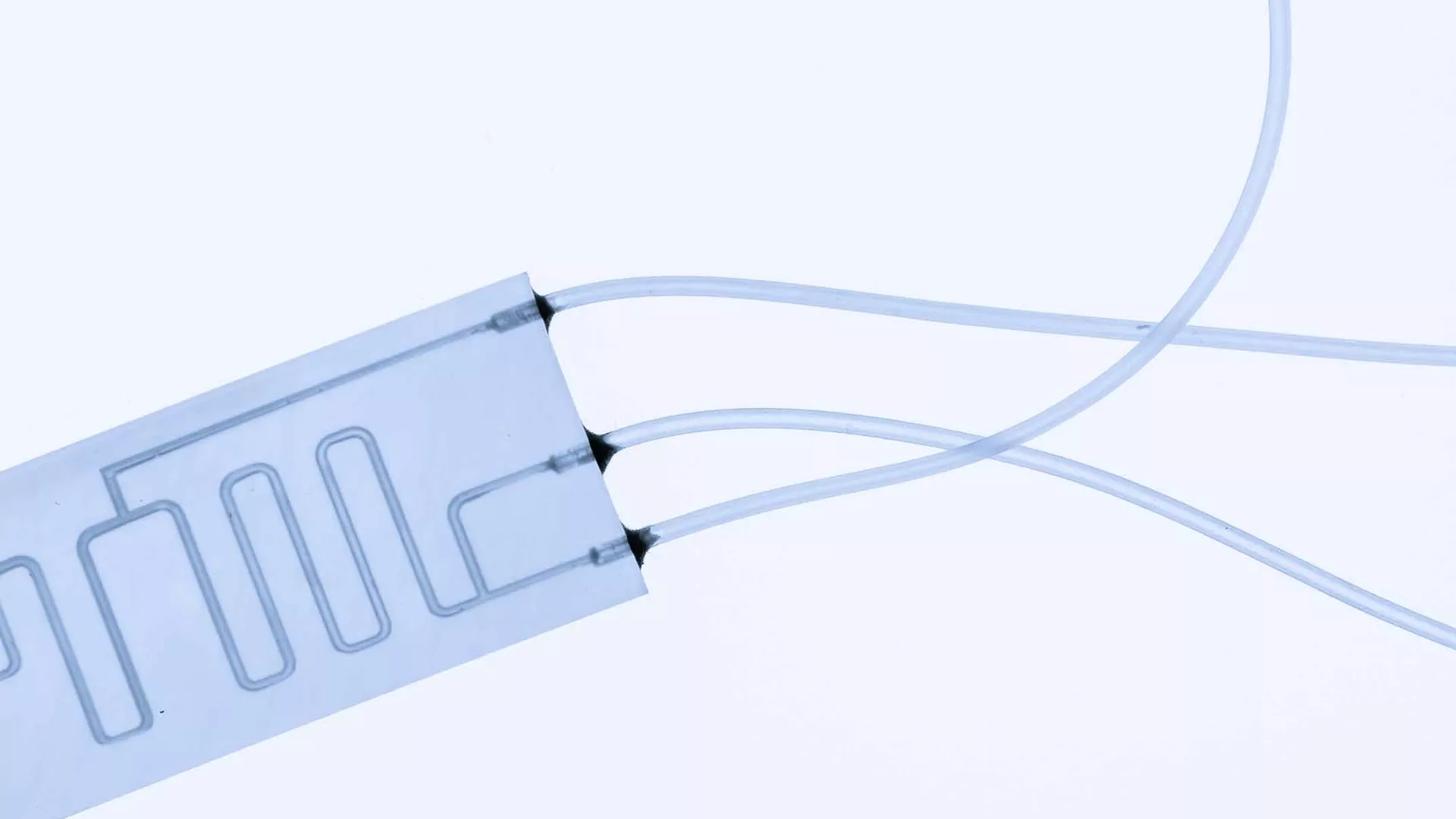
Frontiers in Lab on a Chip Technologies is a multidisciplinary journal that focuses on the development and application of micrototal analytical systems (µTAS). Led by Field Chief Editor Prof. Jonathan Cooper (Universi...
About the journal
Start your submission and get more impact for your research by publishing with us.
Ready to publish? Check our author guidelines for everything you need to know about submitting, from choosing a journal and section to preparing your manuscript.

Reviewing a manuscript? See our editor guidelines for everything you need to know about the Frontiers peer review process.

Our rigorous and transparent peer review combines expert assessment with constructive dialogue to strengthen your manuscript.

Article processing charges apply to articles accepted for publication by our external editors after rigorous peer review.
University of Glasgow
United Kingdom
Editor-in-Chief
Institute of Nanoscience and Nanotechnology, National Centre of Scientific Research Demokritos
Greece
Specialty Chief Editor
Micro- and Nano-fabrication
Institute for Bioengineering of Catalonia (IBEC)
Spain
Specialty Chief Editor
Organ on a Chip
The University of Hong Kong
Hong Kong, SAR China
Specialty Chief Editor
Imaging and Detection
Heriot-Watt University
United Kingdom
Specialty Chief Editor
Environmental Sensors, Sustainability and Reaching Net-Zero
University of Bath
United Kingdom
Specialty Chief Editor
Micro- and Nano-Total Analysis Systems
Imperial College London
United Kingdom
Specialty Chief Editor
Medical Diagnostics
Clemson University
United States
Specialty Chief Editor
Micro- and Nano-fluidics
91 editors · 0 reviewers
Lab on a Chip Technologies
Published
Hamed Ghavami · Yuxiang Liu
Frontiers in Lab on a Chip Technologies
doi 10.3389/frlct.2024.1451278
Lab on a Chip Technologies
Published
Guadalupe G. Garcia · Christopher J. Schmidt · Cynthia Hajal
Frontiers in Lab on a Chip Technologies
doi 10.3389/frlct.2024.1420233
Lab on a Chip Technologies
Published
Hannah A. Richards · Alison J. Eastman · Dusty R. Miller · David E. Cliffel
Frontiers in Lab on a Chip Technologies
doi 10.3389/frlct.2024.1449303
Lab on a Chip Technologies
Published
Dulguunnaran Naranbat · John Murphy · Anubhav Tripathi
Frontiers in Lab on a Chip Technologies
doi 10.3389/frlct.2024.1450891
Lab on a Chip Technologies
Published
Katy Taylor · Stephanie Modi · Jarrod Bailey
Frontiers in Lab on a Chip Technologies
doi 10.3389/frlct.2024.1426895
Lab on a Chip Technologies
Published
Hiroyuki Ohshima
Frontiers in Lab on a Chip Technologies
doi 10.3389/frlct.2024.1438672
Lab on a Chip Technologies
Published
Lily Kamat · Priscilla Delgado · Anjana Dissanayaka · David R. Myers
Frontiers in Lab on a Chip Technologies
doi 10.3389/frlct.2024.1365774
Lab on a Chip Technologies
Published
Yiqiang Fan · Ziyu Li
Frontiers in Lab on a Chip Technologies
doi 10.3389/frlct.2024.1449893
Open for submissions
Open for submissions
Open for submissions
Open for submissions
Open for submissions
Frontiers in Lab on a Chip Technologies is a multidisciplinary journal that focuses on the development and application of micro-total analytical systems (µ-TAS). Led by Field Chief Editor Prof. Jonathan Cooper (University of Glasgow, UK), Frontiers in Lab on a Chip Technologies is a DOAJ-indexed journal that welcomes research contributions in the various domains of microfluidics and miniaturized systems, bridging the gap between fundamental studies and real-world applications. Topics include, but are not limited to: environmental sensors, sustainability and reaching net-zero imaging and detection medical and veterinary diagnostics micro- and nano-total analysis systems micro- and nano-fabrication micro- and nano-fluidics organ on a chip (and systems approaches to biological or physiological sensing) Frontiers in Lab on a Chip Technologies encompasses cross-disciplinary research spanning chemistry, biology, engineering, computing science and molecular biology as well as the environmental, clinical and veterinary sciences. The journal has a broad remit ranging from fundamental studies in fluids and material science to real-world applications. This includes the use of expert systems with deep learning/artificial intelligence to provide users with decision support, helping to guide or inform clinical or environmental analysis in the field, particularly in remote and often low-resource settings where laboratory facilities are unavailable. Furthermore, the journal targets developments in lab-on-a-chip technologies for sustainability and achieving net-zero goals, including environmental impact analysis, methods and materials for reducing single-use plastics, and the adoption of low-power, recyclable microsystems technologies. The journal supports and advances the Sustainable Development Goals (SDGs): Good health and well-being (SDG 3), Quality education (SDG 4), Clean water and sanitation (SDG 6), Reduced inequalities (SDG 10), Sustainable cities and communities (SDG 11), Responsible consumption and production (SDG 12), Climate action (SDG 13), Life below water (SDG 14), Life on land (SDG 15), and Partnerships for the goals (SDG 17). Manuscripts that do not focus on combining analytical techniques with microfluidics and miniaturized systems or their applications are not suitable for publication in this journal. Topics which, whilst potentially closely related, may be considered out of scope would include outputs where “integration” is not clearly shown (for example the development of a sensor, without demonstrating a “sample to answer” workflow). Frontiers in Lab on a Chip Technologies is committed to advancing developments in the field of microfluidics and miniaturized systems by allowing unrestricted access to articles and communicating scientific knowledge to researchers and the public alike, to enable the scientific breakthroughs of the future.
Frontiers in Lab on a Chip Technologies is a multidisciplinary journal that focuses on the development and application of micro-total analytical systems (µ-TAS).
Led by Field Chief Editor Prof. Jonathan Cooper (University of Glasgow, UK), Frontiers in Lab on a Chip Technologies is a DOAJ-indexed journal that welcomes research contributions in the various domains of microfluidics and miniaturized systems, bridging the gap between fundamental studies and real-world applications. Topics include, but are not limited to:
environmental sensors, sustainability and reaching net-zero
imaging and detection
medical and veterinary diagnostics
micro- and nano-total analysis systems
micro- and nano-fabrication
micro- and nano-fluidics
organ on a chip (and systems approaches to biological or physiological sensing)
Frontiers in Lab on a Chip Technologies encompasses cross-disciplinary research spanning chemistry, biology, engineering, computing science and molecular biology as well as the environmental, clinical and veterinary sciences. The journal has a broad remit ranging from fundamental studies in fluids and material science to real-world applications. This includes the use of expert systems with deep learning/artificial intelligence to provide users with decision support, helping to guide or inform clinical or environmental analysis in the field, particularly in remote and often low-resource settings where laboratory facilities are unavailable.
Furthermore, the journal targets developments in lab-on-a-chip technologies for sustainability and achieving net-zero goals, including environmental impact analysis, methods and materials for reducing single-use plastics, and the adoption of low-power, recyclable microsystems technologies.
The journal supports and advances the Sustainable Development Goals (SDGs): Good health and well-being (SDG 3), Quality education (SDG 4), Clean water and sanitation (SDG 6), Reduced inequalities (SDG 10), Sustainable cities and communities (SDG 11), Responsible consumption and production (SDG 12), Climate action (SDG 13), Life below water (SDG 14), Life on land (SDG 15), and Partnerships for the goals (SDG 17).
Manuscripts that do not focus on combining analytical techniques with microfluidics and miniaturized systems or their applications are not suitable for publication in this journal. Topics which, whilst potentially closely related, may be considered out of scope would include outputs where “integration” is not clearly shown (for example the development of a sensor, without demonstrating a “sample to answer” workflow).
Frontiers in Lab on a Chip Technologies is committed to advancing developments in the field of microfluidics and miniaturized systems by allowing unrestricted access to articles and communicating scientific knowledge to researchers and the public alike, to enable the scientific breakthroughs of the future.
Source: https://www.frontiersin.org/journals/lab-on-a-chip-technologies/about
Official section page: https://www.frontiersin.org/journals/lab-on-a-chip-technologies/sections/environmental-sensors-sustainability-and-reaching-net-zero
Official section page: https://www.frontiersin.org/journals/lab-on-a-chip-technologies/sections/imaging-and-detection
Official section page: https://www.frontiersin.org/journals/lab-on-a-chip-technologies/sections/medical-diagnostics
Official section page: https://www.frontiersin.org/journals/lab-on-a-chip-technologies/sections/micro--and-nano-total-analysis-systems
Official section page: https://www.frontiersin.org/journals/lab-on-a-chip-technologies/sections/micro--and-nano-fabrication
Official section page: https://www.frontiersin.org/journals/lab-on-a-chip-technologies/sections/micro--and-nano-fluidics
Official section page: https://www.frontiersin.org/journals/lab-on-a-chip-technologies/sections/organ-on-a-chip
Fees are charged only after acceptance. Waivers and discounts are available for authors with limited funding.
Fees and waivers policySource: https://www.frontiersin.org/journals/lab-on-a-chip-technologies/about
Internal metrics, calculated on this platform and maintained by the editorial office.
Source: official publisher page · retrieved 2026-10-16
Some values were updated by the editorial office on 2026-10-23.