
Dr. Priya Raman
Centre for Responsible Computing
Editor-in-Chief
ML evaluation
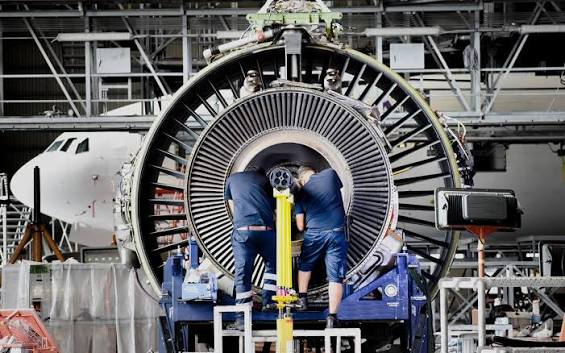
To advance aerospace engineering through rigorous scientific research, foster innovation in sustainable aviation, improve aircraft efficiency and environmental performance, and promote the development of nextgeneratio...
About the journal
Start your submission and get more impact for your research by publishing with us.

Ready to publish? Check our author guidelines for everything you need to know about submitting, from choosing a journal and section to preparing your manuscript.

Reviewing a manuscript? See our editor guidelines for everything you need to know about the Frontiers peer review process.

Our rigorous and transparent peer review combines expert assessment with constructive dialogue to strengthen your manuscript.
Article processing charges apply to articles accepted for publication by our external editors after rigorous peer review.
Centre for Responsible Computing
Editor-in-Chief
ML evaluation
Washington University in St. Louis
United States
Editor-in-Chief
Aerodynamics and Flight Mechanics
Bosphorus Technical University
Associate Editor
Bayesian ML
Northwestern Polytechnical University
China
Specialty Chief Editor
Navigation, Guidance, and Control
RMIT University
Australia
Specialty Chief Editor
Aircraft Materials and Structures
Polytechnic University of Milan
Italy
Associate Editor
Aerodynamics and Flight Mechanics
University of Connecticut
United States
Associate Editor
Energetics and Propulsion
Air Force Research Laboratory
United States
Associate Editor
Energetics and Propulsion
100 editors · 1 reviewer
Aerospace Engineering
Published
Dušan Krokavec · Anna Filasová
Frontiers in Aerospace Engineering
doi 10.3389/fpace.2023.1158718
Aerospace Engineering
Published
James Z. Wells · Manish Kumar
Frontiers in Aerospace Engineering
doi 10.3389/fpace.2023.1184094
Aerospace Engineering
Published
Takuma Sato · Caleb Van Beck · Venkat Raman
Frontiers in Aerospace Engineering
doi 10.3389/fpace.2023.1123249
Aerospace Engineering
Published
Bruno Le Naour · Dmitry Davidenko · Thomas Gaillard · Pierre Vidal
Frontiers in Aerospace Engineering
doi 10.3389/fpace.2023.1152429
Aerospace Engineering
Published
Hikaru Takami · Shigeru Obayashi
Frontiers in Aerospace Engineering
doi 10.3389/fpace.2023.1113646
Aerospace Engineering
Published
Pierre Hellard · Thomas Gaillard · Dmitry Davidenko
Frontiers in Aerospace Engineering
doi 10.3389/fpace.2023.1127671
Aerospace Engineering
Published
Ben Parsonage · Christie Maddock
Frontiers in Aerospace Engineering
doi 10.3389/fpace.2023.1046177
Aerospace Engineering
Published
Alán Cortez · Bryce Ford · Indranil Nayak · Sriram Narayanan · Mrinal Kumar
Frontiers in Aerospace Engineering
doi 10.3389/fpace.2022.1076271
Open for submissions
Open for submissions
Open for submissions
Open for submissions
Open for submissions
Frontiers in Aerospace Engineering publishes fundamental and applied research across aerospace engineering, with a strong emphasis on sustainable aviation and technologies that improve flight efficiency and reduce environmental impact. Its scope includes aerodynamics and flight mechanics, aircraft engineering, aircraft materials and structures, energetics and propulsion, intelligent aerospace systems, and navigation, guidance, and control. Research on electric, hybrid, hydrogen-powered, and other next-generation aircraft is also welcome. Studies focused on military applications or analysis are outside the journal's scope.
To advance aerospace engineering through rigorous scientific research, foster innovation in sustainable aviation, improve aircraft efficiency and environmental performance, and promote the development of next-generation aerospace technologies through interdisciplinary collaboration.
Research in computer science published in Applied Artificial Intelligence Letters.
Research in machine learning published in Applied Artificial Intelligence Letters.
Research in data science published in Applied Artificial Intelligence Letters.
Fees are charged only after acceptance. Waivers and discounts are available for authors with limited funding.
Fees and waivers policyManuscripts are evaluated through the journal's peer-review process by appropriate editors and independent reviewers. Editorial decisions consider scientific quality, originality, methodological rigor, and relevance to the selected specialty section.
Authors, editors, and reviewers must follow recognized standards of research integrity. Plagiarism, fabrication, falsification, duplicate submission, and undisclosed conflicts of interest are unacceptable.
All listed authors must have made meaningful contributions to the research, approved the final manuscript, and agreed to its submission.
The journal follows a gold open-access publishing model. Applicable copyright and Creative Commons licensing terms must be communicated clearly to authors.
Authors should provide transparent descriptions of experimental procedures, simulations, validation methods, and supporting research data, subject to legal and confidentiality restrictions.
Authors, editors, and reviewers must disclose relevant financial, professional, or personal relationships that could influence the research or editorial process.
Corrections, expressions of concern, or retractions may be issued when necessary to protect the accuracy and integrity of the scientific record.
Article processing charges, available fee support, discounts, and institutional funding arrangements must be communicated transparently before publication.
Internal metrics, calculated on this platform and maintained by the editorial office.