
Jean-Pierre Wigneron
Institut National de recherche pour l’agriculture, l’alimentation et l’environnement (INRAE)
France
Editor-in-Chief
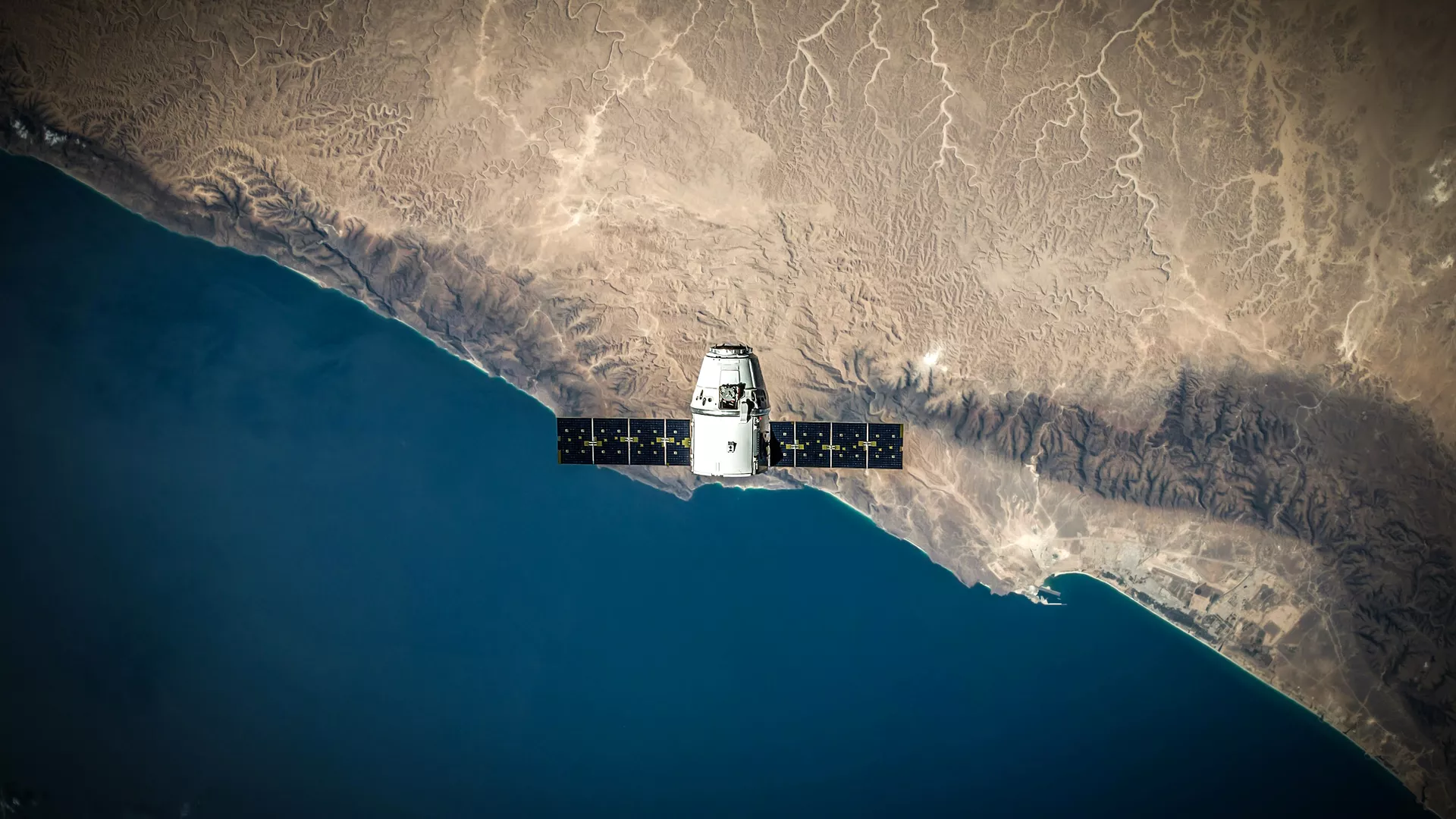
Frontiers in Remote Sensing is a multidisciplinary journal that seeks to bridge pioneering theoretical exploration and practical applications in the realm of remote sensing, ranging from spaceborne to airborne and uno...
About the journal
Start your submission and get more impact for your research by publishing with us.

Ready to publish? Check our author guidelines for everything you need to know about submitting, from choosing a journal and section to preparing your manuscript.

Reviewing a manuscript? See our editor guidelines for everything you need to know about the Frontiers peer review process.

Our rigorous and transparent peer review combines expert assessment with constructive dialogue to strengthen your manuscript.
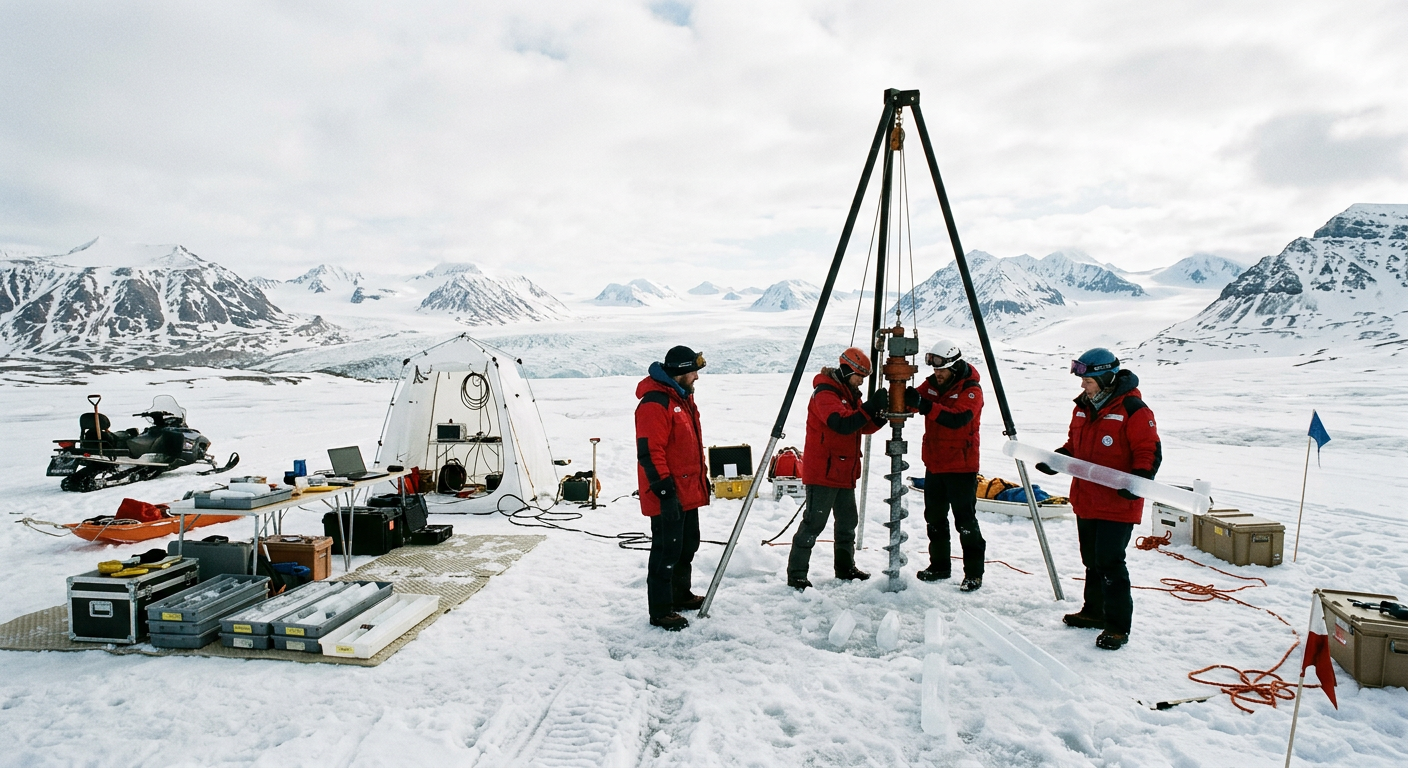
Article processing charges apply to articles accepted for publication by our external editors after rigorous peer review.
Institut National de recherche pour l’agriculture, l’alimentation et l’environnement (INRAE)
France
Editor-in-Chief
School of Civil and Environmental Engineering, Faculty of Engineering and Information Technology, University of Technology Sydney
Australia
Specialty Chief Editor
Data Fusion and Assimilation
Purdue University
United States
Specialty Chief Editor
Acoustic Remote Sensing
School of Geographical Sciences, Faculty of Science, University of Bristol
United Kingdom
Specialty Chief Editor
Image Analysis and Classification
Dalhousie University
Canada
Specialty Chief Editor
Acoustic Remote Sensing
INRAE Nouvelle-Aquitaine Bordeaux
France
Specialty Chief Editor
Terrestrial Water Cycle
University of Bristol
United Kingdom
Specialty Chief Editor
Microwave Remote Sensing
University of Florida
United States
Specialty Chief Editor
Remote Sensing Time Series Analysis
272 editors · 0 reviewers
Original Research
Published
R. Wayne Litaker · Michelle C. Tomlinson · William C. Holland · Kimberly S. Reece · Todd A. Egerton · Travis O. Briggs · Gail P. Scott · Hamish J. Small · Sylvain Gaillard · Savannah A. Mapes
Frontiers in Remote Sensing
doi 10.3389/frsen.2026.1873211
Original Research
Published
Bharat Bhushan · Surender Singh · Somnath Mandal · Vipasha Sharma · Pradeep Kumar · Attila Fülöp · Sara Elhdad
Frontiers in Remote Sensing
doi 10.3389/frsen.2026.1912607
Editorial
Published
Oliver Lux · Gennadi Milinevsky
Frontiers in Remote Sensing
doi 10.3389/frsen.2026.1994165
Original Research
Published
Sheila Baber · Sergii Skakun · Yuval Sadeh · Leonid Shumilo · Oleksandra Oliinyk · Mehdi Hosseini · Josef Wagner · Abdul Qadir Khan · Shabarinath Nair · Abhishek Kotcharlakota · Inbal Becker-Reshef
Frontiers in Remote Sensing
doi 10.3389/frsen.2026.1920951
Original Research
Published
Eva Scrivner · Dexter Hamilton · Daniel Sousa · Margot Mattson · Nicholas E. Williams · Seeta Sistla
Frontiers in Remote Sensing
doi 10.3389/frsen.2026.1927646
Editorial
Published
Sawaid Abbas · Faisal Mueen Qamer · Ali Zia
Frontiers in Remote Sensing
doi 10.3389/frsen.2026.1991820
Original Research
Published
Sawaid Abbas · Zohaib · Nawai Habib · Faisal Mueen Qamer · Majid Nazeer
Frontiers in Remote Sensing
doi 10.3389/frsen.2026.1908768
Original Research
Published
Ahmed S. Almalki · Marcel M. El Hajj · Kasper Johansen · Matthew F. McCabe
Frontiers in Remote Sensing
doi 10.3389/frsen.2026.1860441
Frontiers in Remote Sensing is a multidisciplinary journal that seeks to bridge pioneering theoretical exploration and practical applications in the realm of remote sensing, ranging from spaceborne to airborne and unoccupied aerial system (UASs) and vehicle (UAVs) observations. Led by Field Chief Editor, Dr. Jean-Pierre Wigneron (INRAE Bordeaux, France), and committed to advancing developments in the field by providing unrestricted access to articles and communicating scientific knowledge to researchers and the public, Frontiers in Remote Sensing explores all facets of remote sensing, focusing on major advances in the modeling, development and optimal use of various observation systems dedicated to the monitoring of land, oceans, atmosphere, and space at local and global scales, as well as the interpretation and application of data derived from these systems. The journal aims to cover a wide array of topics, including but not limited to: Fundamental theories of remote sensing Sensor technologies, including instrumentation, calibration, and validation Processing techniques for remote sensing data analysis, including model inversion, machine learning, data classification, data mining, and big data analytics Single and multi-sensor data integration and fusion Multi- and hyper-spectral data analysis Passive and active remote sensing applications Applications in environmental and ecological studies, as well as aimed at better understanding the various processes occurring in the different compartments of the biosphere - agriculture, forest management, urban planning, natural hazards, climate change, etc. Remote sensing for resource exploration Geospatial data science and spatial modelling Spaceborne remote sensing missions and services For manuscripts focusing on applications, the remote sensing perspective should hold significance prominence. The journal particularly welcomes analyses based on long-term time series that combine data from in-situ measurements, remote sensing observations, and model simulations. Analyses based on multiple, independent monitoring systems will be particularly appreciated, allowing for robust and statistically verified results. Manuscripts on advanced mathematical methods (including machine learning methods) dedicated to the analysis of images and time series are also welcome. Frontiers in Remote Sensing welcomes original research articles as well as reviews on topics of general interest, perspectives, and opinion pieces if they present new perspectives in the main area of interest of our journal.
Frontiers in Remote Sensing is a multidisciplinary journal that seeks to bridge pioneering theoretical exploration and practical applications in the realm of remote sensing, ranging from spaceborne to airborne and unoccupied aerial system (UASs) and vehicle (UAVs) observations.
Led by Field Chief Editor, Dr. Jean-Pierre Wigneron (INRAE Bordeaux, France), and committed to advancing developments in the field by providing unrestricted access to articles and communicating scientific knowledge to researchers and the public, Frontiers in Remote Sensing explores all facets of remote sensing, focusing on major advances in the modeling, development and optimal use of various observation systems dedicated to the monitoring of land, oceans, atmosphere, and space at local and global scales, as well as the interpretation and application of data derived from these systems.
The journal aims to cover a wide array of topics, including but not limited to:
Fundamental theories of remote sensing
Sensor technologies, including instrumentation, calibration, and validation
Processing techniques for remote sensing data analysis, including model inversion, machine learning, data classification, data mining, and big data analytics
Single and multi-sensor data integration and fusion
Multi- and hyper-spectral data analysis
Passive and active remote sensing applications
Applications in environmental and ecological studies, as well as aimed at better understanding the various processes occurring in the different compartments of the biosphere - agriculture, forest management, urban planning, natural hazards, climate change, etc.
Remote sensing for resource exploration
Geospatial data science and spatial modelling
Spaceborne remote sensing missions and services
For manuscripts focusing on applications, the remote sensing perspective should hold significance prominence. The journal particularly welcomes analyses based on long-term time series that combine data from in-situ measurements, remote sensing observations, and model simulations. Analyses based on multiple, independent monitoring systems will be particularly appreciated, allowing for robust and statistically verified results. Manuscripts on advanced mathematical methods (including machine learning methods) dedicated to the analysis of images and time series are also welcome.
Frontiers in Remote Sensing welcomes original research articles as well as reviews on topics of general interest, perspectives, and opinion pieces if they present new perspectives in the main area of interest of our journal.
Source: https://www.frontiersin.org/journals/remote-sensing/about
Official section page: https://www.frontiersin.org/journals/remote-sensing/sections/acoustic-remote-sensing
Official section page: https://www.frontiersin.org/journals/remote-sensing/sections/agro-environmental-remote-sensing
Official section page: https://www.frontiersin.org/journals/remote-sensing/sections/atmospheric-remote-sensing
Official section page: https://www.frontiersin.org/journals/remote-sensing/sections/data-fusion-and-assimilation
Official section page: https://www.frontiersin.org/journals/remote-sensing/sections/forest-and-ecosystem-remote-sensing
Official section page: https://www.frontiersin.org/journals/remote-sensing/sections/image-analysis-and-classification
Official section page: https://www.frontiersin.org/journals/remote-sensing/sections/land-cover-and-land-use-change
Official section page: https://www.frontiersin.org/journals/remote-sensing/sections/lidar-sensing
Official section page: https://www.frontiersin.org/journals/remote-sensing/sections/microwave-remote-sensing
Official section page: https://www.frontiersin.org/journals/remote-sensing/sections/multi--and-hyper-spectral-imaging
Official section page: https://www.frontiersin.org/journals/remote-sensing/sections/remote-sensing-time-series-analysis
Official section page: https://www.frontiersin.org/journals/remote-sensing/sections/terrestrial-water-cycle
Fees are charged only after acceptance. Waivers and discounts are available for authors with limited funding.
Fees and waivers policySource: https://www.frontiersin.org/journals/remote-sensing/about
Internal metrics, calculated on this platform and maintained by the editorial office.
Source: official publisher page · retrieved 2026-10-16
Some values were updated by the editorial office on 2026-10-22.