
Ned Budisa
University of Manitoba
Canada
Editor-in-Chief
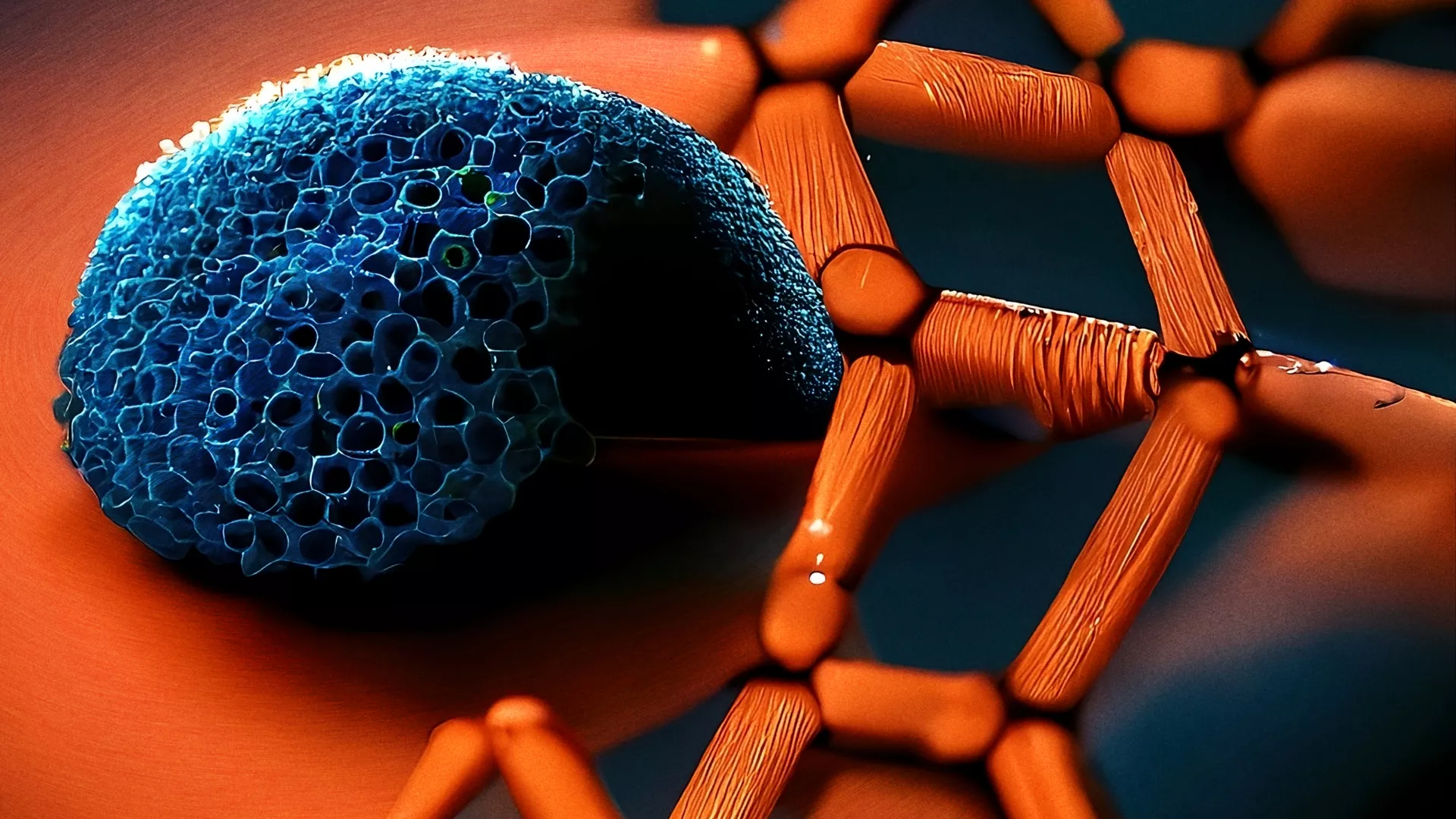
Frontiers in Synthetic Biology is an interdisciplinary field that encompasses research, engineering, and technoscience. Its fundamental premise is that living cells, tissues, and organisms can be regarded as miniature...
About the journal
Start your submission and get more impact for your research by publishing with us.
Ready to publish? Check our author guidelines for everything you need to know about submitting, from choosing a journal and section to preparing your manuscript.

Reviewing a manuscript? See our editor guidelines for everything you need to know about the Frontiers peer review process.
Our rigorous and transparent peer review combines expert assessment with constructive dialogue to strengthen your manuscript.

Article processing charges apply to articles accepted for publication by our external editors after rigorous peer review.
University of Manitoba
Canada
Editor-in-Chief
University of Manitoba
Canada
Specialty Chief Editor
Ecosystems and Biodiversity Sustainability
Rensselaer Polytechnic Institute
United States
Specialty Chief Editor
Metabolic Engineering
Western University
Canada
Specialty Chief Editor
Protein and RNA Engineering
Engineering Biology Research Consortium, EBRC
United States
Specialty Chief Editor
Genetic Systems and Circuit Design
Boston University
United States
Associate Editor
Genetic Systems and Circuit Design
Loughborough University
United Kingdom
Associate Editor
Metabolic Engineering
Universitat Politècnica de València
Spain
Associate Editor
Genetic Systems and Circuit Design
52 editors · 0 reviewers
Synthetic Biology
Published
Choo Yee Yu · Geik Yong Ang · Nurulfiza Mat Isa · Kok-Gan Chan
Frontiers in Synthetic Biology
doi 10.3389/fsybi.2025.1630026
Synthetic Biology
Published
Camille Chartrand-Pleau · Emily Gallipeau-Burns · Ananya Jain · Victor Boddy · Patrick Fakhouri · Sarah Rehmani · Teagan Thomas · Michelle Drapeau · Jordan T. VanderBurgt · Arnaud Boudigou · Adam M. Damry · Allyson M. MacLean
Frontiers in Synthetic Biology
doi 10.3389/fsybi.2025.1619871
Synthetic Biology
Published
Felicity Keiper · Ana Atanassova
Frontiers in Synthetic Biology
doi 10.3389/fsybi.2025.1585337
Synthetic Biology
Published
Alexander D. Duggan · Marcus M. Dillon · David R. McMillen
Frontiers in Synthetic Biology
doi 10.3389/fsybi.2025.1473338
Synthetic Biology
Published
Magdalena San Román · Andrea Arrabal · Belen Benitez-Dominguez · Isabel Quirós-Rodríguez · Juan Diaz-Colunga
Frontiers in Synthetic Biology
doi 10.3389/fsybi.2025.1532846
Synthetic Biology
Published
Marik M. Müller · Katja M. Arndt · Stefan A. Hoffmann
Frontiers in Synthetic Biology
doi 10.3389/fsybi.2025.1548572
Synthetic Biology
Published
Madeline J. Stanley · Lisa Peters · Aidan Guttormson · Julien Tremblay · Jessica Wasserscheid · Lauren Timlick · Charles W. Greer · José Luis Rodríguez Gil · Thor Halldorson · Sonya Havens · Richard Grosshans · Elliott Taylor · Gregg Tomy · David B. Levin · Vince P. Palace
Frontiers in Synthetic Biology
doi 10.3389/fsybi.2025.1517337
Synthetic Biology
Published
Kenton McCorquodale-Bauer · Daniel Flores Orozco · Richard Grosshans · Francis Zvomuya · Nazim Cicek
Frontiers in Synthetic Biology
doi 10.3389/fsybi.2024.1513580
Frontiers in Synthetic Biology is an interdisciplinary field that encompasses research, engineering, and technoscience. Its fundamental premise is that living cells, tissues, and organisms can be regarded as miniature programmable production units. In this analogy, DNA functions as the software that governs the synthesis of proteins, metabolites, and various small and complex molecules, collectively akin to its hardware. Realizing these objectives requires the integration of diverse disciplines, including biological, chemical, software, and mechatronic engineering. It also draws on fundamental sciences such as chemistry, biology, statistics, artificial intelligence, and biophysics, all converging under the umbrella of synthetic biology. Led by Field Chief Editor Ned Budisa from the University of Manitoba, Frontiers in Synthetic Biology understands the significance of being an open-access publisher and aims to contribute positively to the widespread dissemination of research in synthetic biology by bridging the gap between bioengineering, industrial research, and basic sciences, leveraging the interdisciplinary nature of the field. The journal aims to encompass various topics, including: crop engineering ecosystems and biodiversity sustainability genetic systems and circuit design metabolic engineering (synthetic metabolism) orthogonal biological systems protein and RNA engineering synthetic microbiology The journal welcomes high-quality submissions that support and advance research conducted on both in vitro platforms, including microfluidic devices with a particular emphasis on bottom-up synthetic biology, as well as in vivo studies encompassing viruses, bacteria, mammals, plants, and animals in laboratory settings or environmental contexts. We recognize the significance of the integration of biology and digital technologies, which we anticipate will be a major focal point for humanity in the coming decades. This encompasses theoretical and in silico papers that present novel models, tools, and concepts, along with scientific proof-of-principle demonstrations and bioengineering advancements. Special perspective articles will be dedicated to iGEM student teams, companies, and observers from various fields, particularly the social sciences, providing a valuable resource for students and scholars interested in exploring the educational, industrial, and societal dimensions and implications of synthetic biology. Considering the inherent interdisciplinarity of synthetic biology, which often blurs the boundaries with other related research areas and biotechnology, we acknowledge the challenge of clearly differentiating it. To address this, we will foster close collaborations with Frontiers sister journals. This collaborative approach will ensure that we work together to minimize any potential overlap in research coverage, thereby optimizing the publication landscape in the field of synthetic biology.
Frontiers in Synthetic Biology is an interdisciplinary field that encompasses research, engineering, and technoscience. Its fundamental premise is that living cells, tissues, and organisms can be regarded as miniature programmable production units. In this analogy, DNA functions as the software that governs the synthesis of proteins, metabolites, and various small and complex molecules, collectively akin to its hardware. Realizing these objectives requires the integration of diverse disciplines, including biological, chemical, software, and mechatronic engineering. It also draws on fundamental sciences such as chemistry, biology, statistics, artificial intelligence, and biophysics, all converging under the umbrella of synthetic biology.
Led by Field Chief Editor Ned Budisa from the University of Manitoba, Frontiers in Synthetic Biology understands the significance of being an open-access publisher and aims to contribute positively to the widespread dissemination of research in synthetic biology by bridging the gap between bioengineering, industrial research, and basic sciences, leveraging the interdisciplinary nature of the field.
The journal aims to encompass various topics, including:
crop engineering
ecosystems and biodiversity sustainability
genetic systems and circuit design
metabolic engineering (synthetic metabolism)
orthogonal biological systems
protein and RNA engineering
synthetic microbiology
The journal welcomes high-quality submissions that support and advance research conducted on both in vitro platforms, including microfluidic devices with a particular emphasis on bottom-up synthetic biology, as well as in vivo studies encompassing viruses, bacteria, mammals, plants, and animals in laboratory settings or environmental contexts. We recognize the significance of the integration of biology and digital technologies, which we anticipate will be a major focal point for humanity in the coming decades. This encompasses theoretical and in silico papers that present novel models, tools, and concepts, along with scientific proof-of-principle demonstrations and bioengineering advancements.
Special perspective articles will be dedicated to iGEM student teams, companies, and observers from various fields, particularly the social sciences, providing a valuable resource for students and scholars interested in exploring the educational, industrial, and societal dimensions and implications of synthetic biology.
Considering the inherent interdisciplinarity of synthetic biology, which often blurs the boundaries with other related research areas and biotechnology, we acknowledge the challenge of clearly differentiating it. To address this, we will foster close collaborations with Frontiers sister journals. This collaborative approach will ensure that we work together to minimize any potential overlap in research coverage, thereby optimizing the publication landscape in the field of synthetic biology.
Source: https://www.frontiersin.org/journals/synthetic-biology/about
Official section page: https://www.frontiersin.org/journals/synthetic-biology/sections/ecosystems-and-biodiversity-sustainability
Official section page: https://www.frontiersin.org/journals/synthetic-biology/sections/genetic-systems-and-circuit-design
Official section page: https://www.frontiersin.org/journals/synthetic-biology/sections/metabolic-engineering
Official section page: https://www.frontiersin.org/journals/synthetic-biology/sections/protein-and-rna-engineering
Fees are charged only after acceptance. Waivers and discounts are available for authors with limited funding.
Fees and waivers policySource: https://www.frontiersin.org/journals/synthetic-biology/about
Internal metrics, calculated on this platform and maintained by the editorial office.
Source: official publisher page · retrieved 2026-10-16
Some values were updated by the editorial office on 2026-10-23.