
Matjaz Kuntner
National Institute of Biology (NIB)
Slovenia
Editor-in-Chief
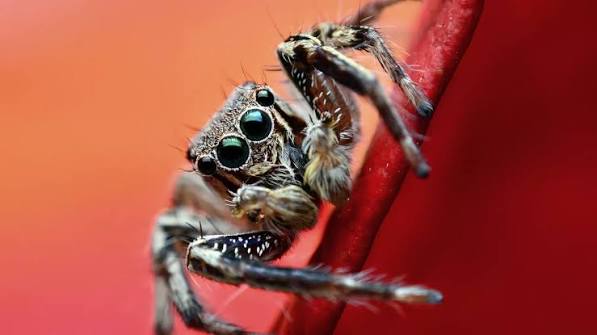
The objectives of Frontiers in Arachnid Science are to advance scientific knowledge of arachnid diversity and biology, promote research on evolution and systematics, improve understanding of ecological interactions an...
About the journal
Start your submission and get more impact for your research by publishing with us.

Ready to publish? Check our author guidelines for everything you need to know about submitting, from choosing a journal and section to preparing your manuscript.

Reviewing a manuscript? See our editor guidelines for everything you need to know about the Frontiers peer review process.

Our rigorous and transparent peer review combines expert assessment with constructive dialogue to strengthen your manuscript.
Article processing charges apply to articles accepted for publication by our external editors after rigorous peer review.
National Institute of Biology (NIB)
Slovenia
Editor-in-Chief
Institut National de recherche pour l’agriculture, l’alimentation et l’environnement (INRAE)
France
Specialty Chief Editor
Microbiota, Vector Biology and Diseases
Lewis & Clark College
United States
Specialty Chief Editor
Diversity, Conservation and Biogeography
University of California, Davis
United States
Specialty Chief Editor
Morphology, Systematics and Evolution
University of Vienna
Austria
Specialty Chief Editor
Ecology and Behavior
University of New South Wales
Australia
Specialty Chief Editor
Silk and Biomaterials
University of the Sunshine Coast
Australia
Specialty Chief Editor
Venoms, Toxinology and Biochemistry
The University of Queensland
Australia
Associate Editor
Venoms, Toxinology and Biochemistry
54 editors · 0 reviewers
Brief Research Report
Published
Abby Heidorn · Matthew R. Graham · Barbara Murdoch
Frontiers in Arachnid Science
doi 10.3389/frchs.2026.1858835
Original Research
Published
Rosa E. Prahl · Pratik Neupane · Angela A. Salim · Richard J. Lewis · Irina Vetter · Robert J. Capon · Glenn F. King · Volker Herzig
Frontiers in Arachnid Science
doi 10.3389/frchs.2026.1888189
Editorial
Published
Volker Herzig · Peter Schausberger · Jason E. Bond · Alejandro Cabezas-Cruz · Matjaž Kuntner
Frontiers in Arachnid Science
doi 10.3389/frchs.2026.1890569
Original Research
Published
Emma C. Brase · Eileen A. Hebets · Kevin B. Smith · Brandi Pessman · Heather Akin · Harley M. Boutard · Laura Segura Hernández · Marshal Hedin · Michael D. Dodd
Frontiers in Arachnid Science
doi 10.3389/frchs.2025.1717365
Specialty Grand Challenge
Published
Jason E. Bond · Matjaž Kuntner
Frontiers in Arachnid Science
doi 10.3389/frchs.2025.1713046
Review
Published
Yuqi Reitsema-Wang · Yuri Simone · Volker Herzig · Ronald A. Jenner · Tim Lüddecke · Jonas Krämer
Frontiers in Arachnid Science
doi 10.3389/frchs.2025.1688532
Brief Research Report
Published
Olaoluwa Oyediran · Shahid Karim
Frontiers in Arachnid Science
doi 10.3389/frchs.2025.1709631
Arachnid Science
Published
Matjaž Gregorič · Dinesh Rao · André Walter
Frontiers in Arachnid Science
doi 10.3389/frchs.2025.1635471
Open for submissions
Open for submissions
Open for submissions
Open for submissions
The journal covers research on extant and extinct arachnids and related chelicerates. Its scope includes arachnid diversity and conservation, biogeography, ecology and behavior, microbiota and vector biology, disease transmission, morphology, systematics, phylogenetics, evolution, venom composition and function, toxinology, biochemistry, silk production, and biomaterials. The journal welcomes theoretical, experimental, comparative, field-based, and applied research that advances understanding of arachnid biology and its wider scientific and societal relevance.
The objectives of Frontiers in Arachnid Science are to advance scientific knowledge of arachnid diversity and biology, promote research on evolution and systematics, improve understanding of ecological interactions and behavior, support conservation and biogeographic studies, encourage research on vector biology and disease, investigate venoms and toxinology, and promote applications of arachnid silk and other biomaterials in science, agriculture, medicine, and engineering.
Official section page: https://www.frontiersin.org/journals/arachnid-science/sections/diversity-conservation-and-biogeography
Official section page: https://www.frontiersin.org/journals/arachnid-science/sections/ecology-and-behavior
Official section page: https://www.frontiersin.org/journals/arachnid-science/sections/microbiota-vector-biology-and-diseases
Official section page: https://www.frontiersin.org/journals/arachnid-science/sections/morphology-systematics-and-evolution
Official section page: https://www.frontiersin.org/journals/arachnid-science/sections/silk-and-biomaterials
Official section page: https://www.frontiersin.org/journals/arachnid-science/sections/venoms-toxinology-and-biochemistry
Fees are charged only after acceptance. Waivers and discounts are available for authors with limited funding.
Fees and waivers policyOpen Access Policy: The journal follows an open-access publishing model, allowing readers worldwide to access published research without subscription barriers.
Peer Review Policy: Manuscripts are evaluated by editors and reviewers with relevant expertise in the selected specialty section. The process assesses scientific quality, methodological rigor, originality, and relevance.
Publication Ethics: Authors must comply with applicable research ethics standards, accurately report findings, disclose funding and conflicts of interest, and provide correct authorship information.
Originality Policy: Submissions must comply with the publisher's policies concerning plagiarism, duplicate publication, and research integrity.
Research Ethics and Safety: Research involving animals, venomous organisms, vectors, or biological materials must follow applicable ethical, legal, and safety requirements.
Data Availability Policy: Authors should follow the journal's data availability and transparency requirements and provide supporting datasets or repository links where applicable.
Corrections and Retractions: Published articles may be corrected or retracted when necessary to preserve the integrity of the scientific record.
Copyright Policy: Articles are published under the publisher's applicable open-access licensing terms.
Internal metrics, calculated on this platform and maintained by the editorial office.